By Holly Wright
The American team will bring a Texas-inspired design to its first home Grand Prix, celebrating the traditions of the American West while continuing its search for a first Formula 1 point.
Cadillac is heading to the United States Grand Prix with a distinctly Texan look, unveiling a cowboy-inspired livery that celebrates the culture, craftsmanship and traditions of the American West.
The special design will adorn the team’s MAC-26 at the Circuit of The Americas in Austin, where Valtteri Bottas and Sergio Pérez will represent Cadillac at a particularly significant race in its debut Formula 1 season.
While the team is still searching for its first championship points, its latest design offers an opportunity to make a statement away from the timing screens. Developed over several weeks through a collaboration between General Motors’ design department and Cadillac’s Formula 1 team, the livery brings a touch of Western wear to the high-tech world of Grand Prix racing.
However, this is much more than a car dressed up for a themed weekend. Behind the striking appearance is a carefully developed design inspired by Texas heritage, intricate embroidery, and the distinctive style of traditional cowboy clothing.
A Cowboy-Inspired Design With Texas At Its Heart
Cadillac’s Austin livery takes inspiration from the American West, drawing on details commonly associated with cowboy shirts, blue jeans, and traditional saddlery.
The most distinctive feature is an embroidery-inspired effect that makes the patterns appear as though they have been stitched directly onto the car’s bodywork. Chain stitching, decorative scrollwork, and carefully placed details give the MAC-26 the appearance of wearing a tailored Western outfit.
The car will retain its black-and-white base, with the new design elements adding character without abandoning Cadillac’s established visual identity.
The project was led in part by Vincent Traina, a design manager at General Motors’ Performance, Motorsports and Accessories studio. A Dallas native and lifelong Formula 1 fan, Traina was ideally placed to bring together his professional experience, passion for the sport and personal connection to Texas.
Traina has followed Formula 1 since childhood, when his father would wake him early to watch races broadcast from Europe. The opportunity to contribute to a special livery for Cadillac’s home race therefore represented a significant moment in his career.
Speaking to GM News, Traina described the project as an opportunity to combine his Texan background with his love of Formula 1 and automotive design.
The creative process began over the summer, when members of Cadillac’s team, led by chief brand advisor Cassidy Towriss, visited General Motors’ design studio in Detroit. From there, the designers settled on a Western-inspired concept that could celebrate Texas without relying on exaggerated stereotypes.
The intention was to create something authentic, sophisticated, and playful, rather than simply covering the car in familiar cowboy imagery.
Traina explained that the team approached the Formula 1 car in much the same way it would approach the interior of a production Cadillac, maintaining a refined finish, a clean colour palette and an elevated level of detail.
That balance is central to the finished design. It celebrates a recognisable part of American culture while remaining consistent with Cadillac’s premium design philosophy.
Why The Embroidery Effect Was Such A Challenge
Recreating the appearance of embroidered fabric on a Formula 1 car proved to be one of the project’s most demanding aspects.
Jamie Thresher, a senior design visualisation CG artist working with Cadillac’s UK-based technical operation, helped translate the creative concept into a design that could work across the MAC-26’s complex bodywork.
Thresher admitted that, among the concepts considered, the Western theme was probably one of the most difficult to execute.
Individual stitches had to be carefully represented in digital illustrations, with the designers working against a tight deadline to produce a finished livery before the Austin weekend.
The challenge was not simply making the car look convincing. Every design element had to fit the contours of a machine shaped by demanding aerodynamic requirements.
Formula 1 cars are engineered around downforce, airflow, and cooling, with bodywork refined to extremely precise dimensions. The design team therefore had to work within the areas made available by the engineers, ensuring the visual treatment complemented the car rather than interfering with its technical requirements.
This required close collaboration between designers in Michigan and the UK, where Cadillac’s Formula 1 technical centre is based.
Despite the pressure, the project became an exciting opportunity for those involved. Traina praised the exchange of ideas between the two teams, while Thresher described the experience as something he had never expected to be part of his career.
For both designers, the livery represents a chance to contribute to Formula 1 in an unusual way, bringing together automotive design, digital illustration, and American cultural heritage.
The Hidden Details That Make Cadillac’s Livery Special
Look closely at the MAC-26 and the design reveals several references to the United States and its host city.
The livery features 50 stars representing the American states, cactuses associated with Texas, an embroidered depiction of the Austin skyline and a map of the Circuit of The Americas.
There is also a horseshoe with its heels pointing upwards, a traditional good-luck symbol.
These details help distinguish the livery from a straightforward colour change. They connect the design directly to Austin and Texas, giving fans additional elements to discover when the cars appear on track.
The tribute also extends beyond the cars themselves. Bottas and Pérez will wear specially designed driver suits that echo the Western-inspired theme, ensuring the team’s presentation is consistent throughout the weekend.
For Cadillac, the finer details are just as important as the overall appearance. The intention is to create a design that rewards closer inspection while remaining unmistakably a Formula 1 car.
Cadillac’s Third Special Livery Of The Season
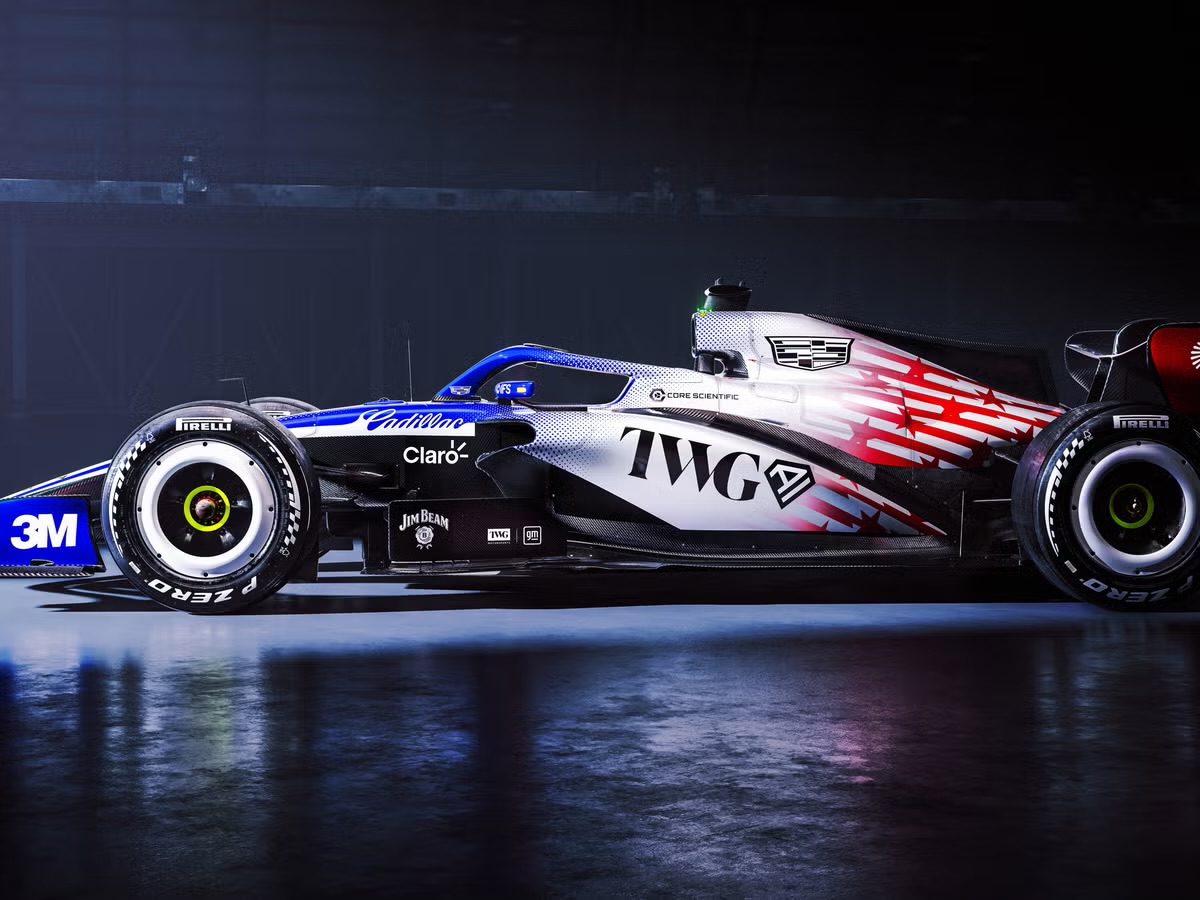
The Austin design is the third one-off livery Cadillac has introduced during its debut season, continuing a wider exploration of the team’s American identity.
At the Miami Grand Prix in May, the team drew inspiration from American symbols, incorporating a Stars and Stripes theme into its design. At the British Grand Prix at Silverstone in July, it turned to American colours, using red, white, and blue to celebrate its national identity.
Austin represents the next stage of that approach.
Rather than relying on flags or familiar colour combinations, Cadillac has chosen to explore the character and craftsmanship of the American West.
Towriss has explained that the team wanted each design to express a different aspect of American culture while remaining authentic and distinctive.
That makes the Austin livery particularly fitting. Texas has a strong cultural identity of its own, and the cowboy-inspired design allows Cadillac to acknowledge its host state’s traditions while presenting itself as an American manufacturer competing on the world stage.
The project also reflects the wider relationship between Cadillac’s production-car design heritage and its ambitions in Formula 1. By bringing together traditional craftsmanship and modern engineering, the team is attempting to communicate its identity through something fans can see immediately.
Cadillac Is Not The Only Team Bringing Something Different To Austin
The cowboy-inspired MAC-26 will be among several eye-catching cars at this weekend’s United States Grand Prix, with Ferrari, Haas, Aston Martin and Mercedes also introducing special liveries or designs.
Ferrari’s SF-26 cars, driven by Charles Leclerc and Lewis Hamilton, will feature blueprint-inspired graphics developed with title partner HP.
Its design focuses on the work that takes place long before a car reaches the circuit, using sketches, technical drawings and engineering-inspired imagery to celebrate the journey from an initial idea to a finished racing machine.
The project involved collaboration between Ferrari’s design teams in Maranello and HP specialists, with HP Latex technology helping reproduce the intricate graphics across the cars’ bodywork.
Haas, meanwhile, has unveiled a Godzilla Minus Zero design for Ollie Bearman and Esteban Ocon. The livery continues the team’s collaboration with Japanese entertainment studio TOHO, bringing light-blue accents and bold patterns to a design inspired by the iconic monster.
Aston Martin will also mark a milestone, with a special AMR26 livery celebrating five years of partnership with Cognizant. The collaboration began when the team returned to Formula 1 in 2021 and has continued to evolve, including Cognizant’s role as the team’s Global AI Services Partner.
Mercedes have now joined the list, unveiling a revised, one-off design for the W17 cars of Kimi Antonelli and George Russell. The Silver Arrows revealed the special livery on social media on Wednesday, highlighting Mercedes-Benz’s MANUFAKTUR customisation programme.
The team’s familiar silver, black and green colour scheme will be joined by flashes of blue at the Circuit of The Americas. Mercedes have also produced matching race suits for both drivers and personalised AMG GT 4 Door Coupés, with further activations planned throughout the weekend.
Each design tells a different story. Ferrari is celebrating engineering and innovation, Haas is embracing Japanese popular culture, Aston Martin is marking a long-standing commercial partnership, and Mercedes is showcasing its bespoke vehicle customisation programme.
Cadillac’s contribution is more closely tied to its own identity as an American team, using the traditions of Texas to create something that stands apart from its rivals. With several teams bringing distinctive designs to Austin, the weekend will offer plenty of visual interest away from the on-track action.
The Bigger Challenge Remains On Track
For all the attention the livery is likely to attract, Cadillac’s most important task in Austin will be improving its performance and reliability.
The team has yet to score a point in its debut season, making its first home Grand Prix an opportunity to demonstrate progress in front of an American audience.
There are encouraging signs. Bottas and Pérez both finished the Singapore Grand Prix, a welcome result for a team that has experienced significant reliability difficulties. The pair have accumulated 12 retirements between them this season, highlighting the importance of getting both cars to the chequered flag.
Cadillac is also reportedly bringing a small performance upgrade package to Austin. Changes to the floor are intended to improve aerodynamic performance, while further work on the cooling system could help address one of the team’s major reliability concerns.
The weekend will also provide an opportunity for Colton Herta to take another step in his Formula 1 development. The American reserve driver will replace Pérez for the opening practice session, marking his fourth FP1 appearance of the season as he continues to accumulate Super Licence points.
His participation adds another homegrown American storyline to Cadillac’s weekend, complementing the team’s wider celebration of its national identity.
Ultimately, a striking livery cannot substitute for competitive pace, and Cadillac will be judged on what it achieves on the circuit as well as how its cars look.
Nevertheless, the Austin design represents an important moment for a team still establishing itself in Formula 1. It brings together the creativity of General Motors’ designers, the engineering expertise of the UK-based operation and a cultural identity rooted in the state hosting its home race.
Cadillac’s cowboy-inspired livery may not deliver the championship points the team is chasing, but it offers a clear statement about who it wants to be.
As the MAC-26 takes to the track at the Circuit of The Americas, the message is unmistakably American: Cadillac is embracing its roots, celebrating Texas, and using its first home Grand Prix to put its own distinctive stamp on Formula 1.

