By Holly Wright
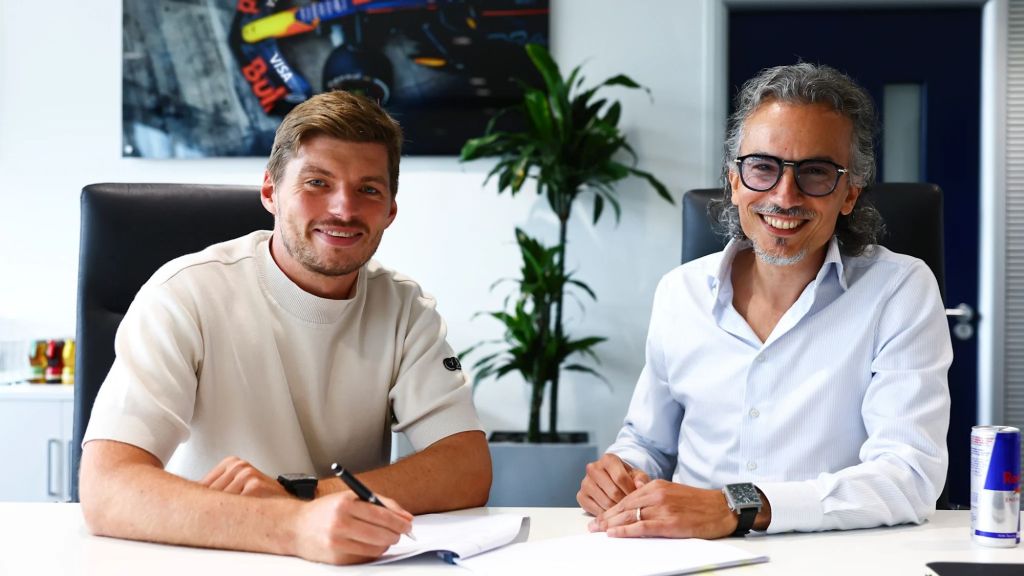
Max Verstappen has finally put an end to the uncertainty surrounding his Formula 1 future, committing himself to Red Bull until the end of the 2030 season.
The announcement brings months of speculation to a close, with Mercedes and McLaren both previously linked with moves for the four-time world champion.
More importantly, however, Verstappen’s decision represents a commitment not only to Red Bull, but to Formula 1 itself.
The Dutchman had openly questioned whether he still wanted to compete under the sport’s new regulations, making the decision far more complicated than simply choosing between rival teams.
A Relationship Built On Success
Verstappen’s connection with Red Bull stretches back to 2014, when he joined the team’s junior programme. After a season with Toro Rosso in 2015, he was promoted to the senior team just four races into the 2016 campaign.
He could hardly have made a stronger introduction, winning his first race for Red Bull at the age of just 18.
Since then, the partnership has produced four Drivers’ Championships, two Constructors’ Championships and 71 Grand Prix victories. Verstappen’s win tally now places him third on Formula 1’s all-time list, behind only Lewis Hamilton and Michael Schumacher.
For a driver who has spent virtually his entire top-level career within the Red Bull family, leaving was always going to be a major decision.
Why Leaving Became A Possibility
The uncertainty surrounding Verstappen’s future was not without reason.
His previous contract ran until 2028 but was understood to contain performance-related mechanisms that could potentially have allowed him to depart earlier. At the same time, Red Bull’s struggles with the 2026 regulations created genuine questions about whether the team could give Verstappen a car capable of fighting at the front.
Mercedes emerged as an obvious potential destination, particularly given Toto Wolff’s long-standing admiration for Verstappen. McLaren were also mentioned, with speculation even surrounding the possibility of an extraordinary driver swap involving Oscar Piastri. Ultimately, neither option materialised.
Verstappen remains sixth in the championship and has yet to win a race this season, with his best results being second place finishes in Austria and Hungary. That represents a significant fall from last year’s title fight when he recovered from a deficit of more than 100 points to finish just two points behind eventual champion Lando Norris.
The Bigger Question Was Formula 1 Itself
Perhaps the most revealing part of Verstappen’s decision is that changing teams was not necessarily his biggest concern.
The introduction of the latest generation of power units has frustrated him throughout the season, particularly the level of energy management required. For a driver who thrives on pushing a car to its limits, having to constantly manage battery deployment has taken away some of what he enjoys most about racing.
After the Japanese Grand Prix, Verstappen even questioned whether continuing in F1 was worthwhile. That makes his latest comments particularly significant.
“I was closer to retiring than changing teams,” Verstappen said when discussing his decision.
Changes to the regulations over the coming seasons, alongside discussions around future engine concepts, appear to have helped convince him that the sport is moving towards something more enjoyable.
Faith in Red Bull’s Rebuild
There is also renewed confidence in the direction Red Bull is taking. Laurent Mekies became team principal in July 2025 and has overseen a rebuilding period following a difficult spell for the organisation. Securing Verstappen’s commitment is arguably the biggest indication yet that the Dutchman believes the team can recover.
The relationship between the pair appears to have been particularly important. Verstappen has described his discussions with Mekies as open and transparent, while Red Bull’s willingness to allow him to pursue racing outside F1 has also strengthened the relationship.
His participation in the Nürburgring 24 Hours was a notable example of that freedom.
For Verstappen, the decision therefore goes beyond simply believing Red Bull can build a competitive car again. He has repeatedly described the team as a second family and has long maintained that finishing his career there would be the ideal outcome.
A Statement Of Intent
The 2030 extension does not necessarily mean Verstappen is locked into Red Bull regardless of what happens. Performance-related mechanisms are understood to remain part of the agreement, although the exact details have not been made public.
Nevertheless, the message is clear. Red Bull have retained the driver who has been central to the most successful period in their history, while Verstappen has chosen familiarity, trust, and belief in the team’s future over a move elsewhere.
Announcing the deal ahead of his final Dutch Grand Prix at Zandvoort adds another layer of significance.
After months of questions over whether Verstappen would even remain in Formula 1, his future is now considerably clearer. The four-time champion still wants to race. He still wants to win and for now, he believes Red Bull is the place where he can do both.
 WHEEL2WHEEL REPORTS