By Holly Wright
Few races have a relationship with their surroundings quite like the Dutch Grand Prix.
Set among the dunes of Zandvoort on the North Sea coast, around 40 kilometres west of Amsterdam, the circuit has produced some of Formula 1’s greatest moments, darkest tragedies, and most memorable comebacks.
Now, after returning to the calendar in 2021, Zandvoort is preparing for another goodbye.
From Wartime Roads to Formula 1
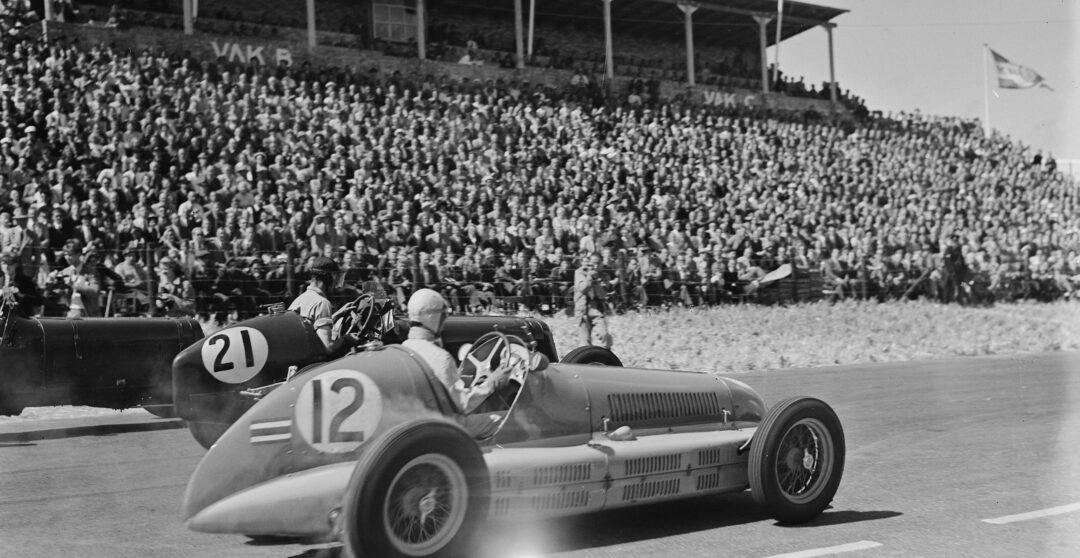
Zandvoort’s racing story began before the modern Formula 1 World Championship. The circuit opened in 1948, with the first major event held under the name Zandvoort Grand Prix.
Its foundations were unusual. Roads constructed during the Second World War were later widened and connected to create a permanent racing circuit among the dunes.
John Hugenholtz is often credited with designing Zandvoort, but the reality is more complicated. The circuit was developed by Dutch motorcycle racing officials and enthusiasts, with assistance from Sammy Davis, the 1927 Le Mans winner.
The original layout was around 4.2 kilometres long, featuring fast, flowing corners, elevation changes, and the famous Tarzan bend.
The Dutch Grand Prix became part of the Formula 1 World Championship in 1952, although races had already taken place at Zandvoort. Louis Rosier won the non-championship events in 1950 and 1951 before Alberto Ascari won the first two championship editions.
The early years were far from straightforward. Financial problems caused the race to disappear in 1954, while further cancellations followed in 1956 and 1957. Stirling Moss won in 1958 before Jo Bonnier claimed victory the following year, the only Grand Prix win of his career.
Jim Clark Domination
If one driver dominated the early history of Zandvoort, it was Jim Clark.
The Scot won four Dutch Grands Prix, taking victory in 1963, 1964, 1965 and 1967. His record remains unmatched.
The 1967 victory was particularly important. Clark won the first race for the Lotus 49 and Ford-Cosworth DFV engine, beginning the competitive career of one of Formula 1’s most influential engines.
Clark’s impact can still be seen in the statistics. He led 370 laps at Zandvoort, more than any other driver, but alongside the brilliance came the dangers of the era.
The 1970 Dutch Grand Prix was won by Jochen Rindt in the Lotus 72, a car that appeared capable of taking him to the World Championship. Yet the race was overshadowed by the death of Piers Courage after a heavy crash and fire at the fast Tunnel Oost section.
Rindt himself would die later that year at Monza, highlighting just how dangerous Formula 1 remained.
Tragedy and the Safety Revolution
Safety concerns eventually reached breaking point.
The Dutch Grand Prix was dropped from the 1972 calendar after drivers refused to race at Zandvoort because its facilities and safety standards were considered inadequate. Organisers lacked the funds to make the improvements demanded by the drivers.
The circuit returned in 1973 following redevelopment, including new barriers, improved pits and a chicane designed to reduce speeds, yet tragedy struck again.
Roger Williamson crashed heavily on the eighth lap, and his car caught fire. Williamson survived the initial impact but became trapped inside the burning March, eventually dying from asphyxiation.
David Purley stopped and desperately attempted to rescue him but was unable to overturn the car. Poor communication and inadequate emergency equipment made the situation even worse, while marshals struggled to intervene.
Purley’s bravery was later recognised with the George Medal, but the incident became another stark illustration of Formula 1’s inadequate safety standards.
Jackie Stewart won the race and, with his 26th victory, surpassed Clark’s record for Grand Prix wins; however, nobody was interested in celebrating.
The Original Era
Zandvoort remained on the calendar despite its troubled history.
Niki Lauda won in 1974, while James Hunt claimed his first World Championship Grand Prix victory at the circuit in 1975 before winning again in 1976. Mario Andretti won in 1978, the final victory of his Formula 1 career.
The circuit continued to evolve as cars became faster. Chicanes were added and modified, while incidents such as Gilles Villeneuve’s extraordinary recovery after going off track in 1979 became part of Zandvoort folklore.
The final race of the original era came in 1985. Lauda won his 25th and final Grand Prix, narrowly beating McLaren teammate Alain Prost by just 0.232 seconds, which was a fittingly dramatic ending.
The company operating the circuit subsequently went out of business, and the Dutch Grand Prix disappeared from Formula 1.
Zandvoort Refused to Disappear
Although the Grand Prix was gone, Zandvoort survived. Part of the site was sold in 1987, and the circuit was later shortened and redeveloped. By 2001, it had been extended again, with new facilities, grandstands, and a longer layout.
The circuit also became an important venue for junior categories, keeping Zandvoort’s name alive in single-seater racing. Then came the driver who would change everything.
The Verstappen Effect
Max Verstappen’s arrival in Formula 1 transformed Dutch interest in the sport.
After becoming the youngest driver to win a Grand Prix in 2016, Verstappen developed a huge following. Dutch supporters began travelling across Europe in large numbers, creating the now-famous sea of orange.
After years of speculation, the Dutch Grand Prix’s return was confirmed in 2019. Zandvoort needed significant work to bring the circuit up to modern Formula 1 standards. Around €4 million was invested, including improvements to access, run-off areas, and spectator facilities.
The final corner, Arie Luyendijkbocht, was banked to encourage overtaking, but the comeback was halted by Covid-19 in 2020, postponing the race, meaning fans had to wait even longer.
Finally, in 2021, Formula 1 returned to Zandvoort and Verstappen delivered.
A Sea of Orange
The 2021 Dutch Grand Prix was unlike anything Zandvoort had experienced before. Orange filled the grandstands as Verstappen won his home race, becoming the first Dutch driver to win the Dutch Grand Prix.
The victory also made the Netherlands the 12th country to produce a home Formula 1 winner. Verstappen won again in 2022 and 2023, creating three consecutive home victories.
The 2022 event attracted around 305,000 spectators across the weekend, setting a new attendance record. The same figure was reached in 2023, when rain added further drama to Verstappen’s third consecutive victory.
That 2023 win was historically significant for another reason. It was Verstappen’s ninth consecutive Grand Prix victory, equalling Sebastian Vettel’s record before Verstappen surpassed it at Monza the following weekend.
For a time, Zandvoort had become Verstappen’s kingdom, but his dominance eventually ended.
Lando Norris won in 2024, ending Verstappen’s run, before Oscar Piastri followed with victory in 2025.
McLaren’s back-to-back wins showed that Zandvoort had become more than simply Verstappen’s home stage.
A Story of Survival
The history of the Dutch Grand Prix is about much more than a list of winners; it is a story of survival.
Zandvoort began with roads born from wartime circumstances and developed into one of Formula 1’s most distinctive circuits. It witnessed the brilliance of Clark, the emergence of the DFV, the final victory of Lauda and the rise of Verstappen.
It also witnessed tragedy. The deaths of Courage and Williamson exposed the dangers of an era when safety could not keep pace with the speed of Formula 1.
Then Zandvoort disappeared for 36 years. When it returned, it did so with a new generation of fans, a new hero, and an atmosphere unlike almost anywhere else on the calendar.
Verstappen gave the Dutch fans the home victories they had waited decades to see. Norris and Piastri have since ensured that the modern era has not been entirely about one driver.
Another Goodbye
Despite the success of its comeback, the Dutch Grand Prix’s modern return will be short-lived as it prepares to disappear once again
The race was initially given a three-year agreement, later extended, but organisers eventually confirmed that 2026 would be the final Dutch Grand Prix at Zandvoort.
Financial considerations have played a role in the decision, with Formula 1 stating that organisers turned down opportunities to continue either annually or on a biennial basis.
The final edition will have one extra attraction. Zandvoort will host its first Formula 1 Sprint weekend in 2026, meaning fans will get an additional Saturday race before the Grand Prix itself. It will be a fittingly busy farewell.
For one final weekend in 2026, the orange smoke will rise above the dunes, the cars will attack Zandvoort’s banked corners, and Formula 1 will once again race beside the North Sea; then the circuit will leave the calendar, but Zandvoort’s place in Formula 1 history is already secure. From Jim Clark to Max Verstappen, from tragedy to revival, few circuits have experienced quite so much or returned from the brink quite so often.

