By Laura Juliana Flórez Alba
Even though Mercedes secured both championships early in the season, the competitive picture shifted drastically in the closing races. With rival teams bringing relentless updates, the stage is set for a tightly contested season.
Yet, when analysing the trajectory of the grid, one team emerges as the undisputed primary challenger.
The Case For Red Bull As The Primary Threat
If there is a consensus on who will push Mercedes to the limit next year, Red Bull Racing is the definitive answer. The team suffered a turbulent start to the 2026 season but engineered a spectacular late-season turnaround.
Verstappen dominated the final stretch, securing three victories in five races and pulling off a legendary drive from 21st to a podium finish in Brazil.
Red Bull’s status as the ultimate challenger is further solidified by the FIA’s incoming 2027 technical regulations. Designed to cure the energy deployment issues of this year, the new rules pivot sharply back to combustion power.
Assessing The Grid’s Contender Status
Here is how the grid’s top teams stack up in the race to become the ultimate contender.
Red Bull Racing: The Prime Challenger
Red Bull’s advantage is an elite internal combustion engine that perfectly aligns with the new 58/42 power rules. However, their biggest obstacle will be operational consistency.
To truly dethrone Mercedes, they must avoid the erratic chassis performance that compromised the first half of their 2026 season and deliver a reliable car from the beginning.
Mercedes: The Defending Favourites
The reigning champions remain a towering presence. Their primary advantage is the luxury of time; having clinched the 2026 title so early, Mercedes was able to divert all wind tunnel and engineering resources to their 2027 season.
Boasting a stable, championship-winning driver pairing, their singular challenge will be fending off the explosive raw pace that Red Bull unleashed at the end of last year.
McLaren: The Aerodynamic Dark Horse
McLaren enters the fray as a highly capable threat ready to capitalise on new freedoms. In 2026, their exceptional aerodynamic package was held back by mandated, flawed gear ratios.
Now that the FIA has eliminated gearbox homologation, McLaren has the freedom to completely redesign their transmission, curing their biggest mechanical weakness.
Their main hurdle will simply be playing catch-up, as their extended 2026 development left them slightly behind Mercedes in dedicated 2027 wind tunnel testing.
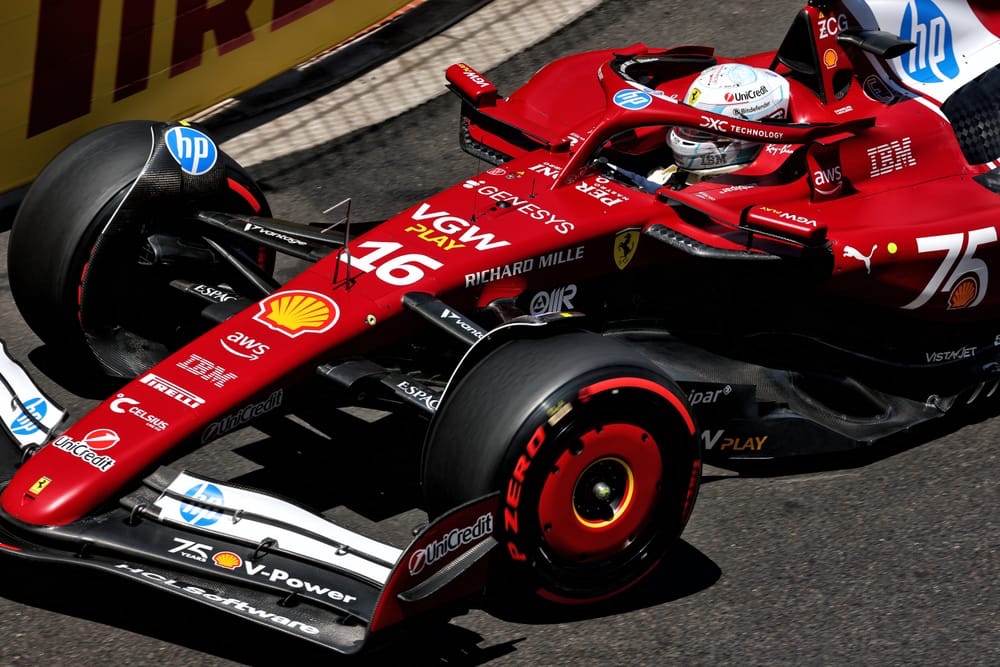
Ferrari: The Rebuilding Wildcard
For Ferrari, the 2027 season will be an uphill battle against regulations they initially opposed. Their engine philosophy was not built for the new ICE-heavy rules.
Fortunately, their lifeline is the FIA’s Additional Development and Upgrade Opportunities (ADUO) framework, which grants them extra upgrade tokens.
Ferrari’s entire season hinges on whether they can use these to rapidly overhaul their combustion engine and close the gap to Red Bull’s benchmark.
2027 Regulatory Changes
The sport will adopt a 58/42 power split, increasing the internal combustion engine (ICE) output to 420kW while throttling the electrical MGU-K down to 300kW, alongside a 5% increase in fuel flow and raised energy harvesting limits (375kW).

