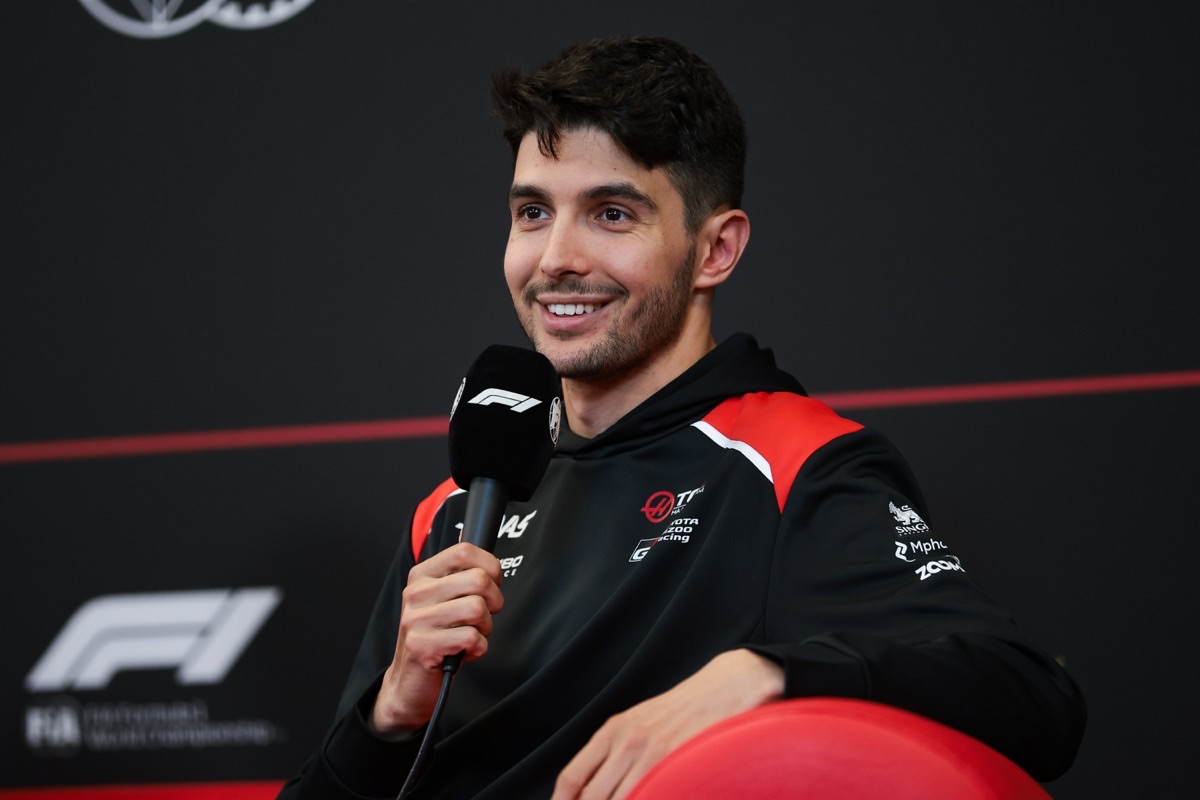
By Diane Versaevel
Comprehensive Performance Review: Esteban Ocon
Esteban Ocon has established himself as one of Formula 1’s most resilient and uncompromising midfield drivers. Since making his Grand Prix debut at the 2016 Belgian Grand Prix with Manor Racing, the French driver has compiled a tenured career defined by defensive tenacity, technical adaptability across major regulation shifts, and an exceptional capacity to capitalize on high-attrition, complex race conditions. Spanning ten seasons with Manor, Force India/Racing Point, Renault/Alpine, and Haas F1 Team, Ocon has accumulated over 190 Grand Prix starts, 486 championship points, four podium finishes, and a victory at the 2021 Hungarian Grand Prix.
An analysis of Ocon’s performance metrics highlights a distinct operational profile. His wheel-to-wheel race craft and tire management make him a consistently reliable points scorer on Sundays. However, his single-lap qualifying pace has periodically faced pressure when paired alongside explosive teammates or rapidly developing rookies.
Career Trajectory and Major Milestones
Ocon’s entry into Formula 1 was built on a junior single-seater career, highlighted by consecutive championship titles in the 2014 FIA Formula 3 European Championship and the 2015 GP3 Series as a Mercedes Junior driver. After a mid-season entry with Manor Racing in 2016, Ocon secured a full-time seat at Force India for 2017, where he set a Formula 1 record by completing his first 27 consecutive Grand Prix entries without retirement. His maiden victory at the 2021 Hungarian Grand Prix featured 65 laps of error-free defensive driving under sustained pressure from Sebastian Vettel.
Teammate Head-to-Head Comparative Analysis
Direct teammate comparisons offer the clearest benchmark for driver performance in identical hardware. Ocon’s recent campaigns at Alpine and Haas illustrate a competitive benchmark against established race winners, balanced by evolving dynamics when paired against younger drivers.
Alpine F1 Team (2024): Esteban Ocon vs. Pierre Gasly
The 2024 campaign at Alpine was conducted under difficult operational conditions, marked by chassis weight penalties and mid-season organizational shifts. Despite announcing his departure from the Enstone squad early in the year, Ocon maintained a slight advantage over teammate Pierre Gasly in head-to-head qualifying and race finishing metrics.
Gasly ultimately accumulated more points over the full season (36 points to 23), benefiting from late-season scoring runs in Qatar and Abu Dhabi after Ocon was released prior to the season finale. However, Ocon’s wet-weather drive to 2nd place at Interlagos accounted for the majority of his points tally and was fundamental in securing 6th place for Alpine in the Constructors’ World Championship.
Haas F1 Team (2025): Esteban Ocon vs. Oliver Bearman
Ocon transitioned to the Haas F1 Team for the 2025 season on a multi-year deal, assuming a lead role alongside British rookie Oliver Bearman. The season demonstrated a clear shift in performance balance across the year. Ocon adapted rapidly to the Haas VF-25, collecting early points finishes, including a 5th-place finish in Shanghai and a 7th-place result in Monaco.
As the season progressed post-summer break, Bearman demonstrated significant single-lap development, outqualifying Ocon 14–10 over the 24-race season with an average pace advantage of 0.117%. While both drivers ended equal on race-day finishes (12–12), Bearman narrowly outscored Ocon 41 to 38 in the Drivers’ Standings, supported by a team-equalling best finish of 4th place at the Mexico City Grand Prix.
Driving Profile, Tactical Attributes, and Regulatory Boundaries
Race Craft and Positional Defensiveness
Ocon’s tactical profile is defined by positional defense and late-braking trajectory placement. He rarely yields track position voluntarily, making him effective at holding off faster cars on narrow street tracks like Monaco and Baku, though this trait has occasionally generated intra-team contact. Telemetry analysis indicates that Ocon excels at extending tire stints without sacrificing mid-corner minimum speeds, providing his strategy engineers flexibility to execute overcut strategies in the midfield.
Regulatory Precision and Penalty Compounding
A notable aspect of Ocon’s analytical profile is his history of regulatory infractions, reflecting a driving style that operates on the extreme boundary of circuit limits and procedural compliance.
The most prominent example of this occurred at the 2023 Austrian Grand Prix at the Red Bull Ring, where Ocon set a Formula 1 record by incurring five separate penalties in a single Grand Prix. Four post-race penalties totaling 30 seconds were levied for track limit violations at Turns 9 and 10 following automated post-race FIA telemetry reviews, adding to an in-race 5-second penalty for an unsafe pit-lane release. This surpassed his previous joint-record of three penalties set at the 2023 Bahrain Grand Prix, which stemmed from grid box misalignment, premature penalty service during a pit stop, and pit-lane speeding.
Contemporary Performance and 2026 Technical Regulation Era
2026 Technical Campaign Execution
The 2026 Formula 1 technical regulations introduced active aerodynamics, reduced vehicle dimensions, and a 50/50 electrical and internal combustion power unit distribution. For Haas and Ocon, the 2026 campaign has proven challenging amidst a competitive midfield field.
Through the first 13 rounds of the 2026 season leading up to the Italian Grand Prix at Monza, Haas occupies 7th position in the Constructors’ World Championship with 21 points, largely compiled by Oliver Bearman’s 18-point contribution. Ocon has recorded two point-scoring results, a 10th-place finish at Suzuka and a 9th-place drive in Monaco, placing him 18th in the Drivers’ Standings with 3 points.
Ocon’s 2026 performance trends reveal qualifying limitations, as the Haas VF-26’s narrow drag window has frequently confined him to Q1 or early Q2 eliminations, requiring recovery drives on race day. Despite these qualifying challenges, his race pace delta remains within one-tenth of a second of Bearman, demonstrating that his Sunday operational execution remains steady despite chassis performance constraints.
Looking forward through the 2026 active aerodynamics era, Ocon’s primary objective at Haas is to widen his qualifying setup window and optimize Saturday performance. If Haas can deliver incremental aerodynamic consistency to the VF-26, Ocon’s experience, defensive capability, and race execution provide the team with a dependable platform to secure consistent midfield results.

