By Kayleigh northall
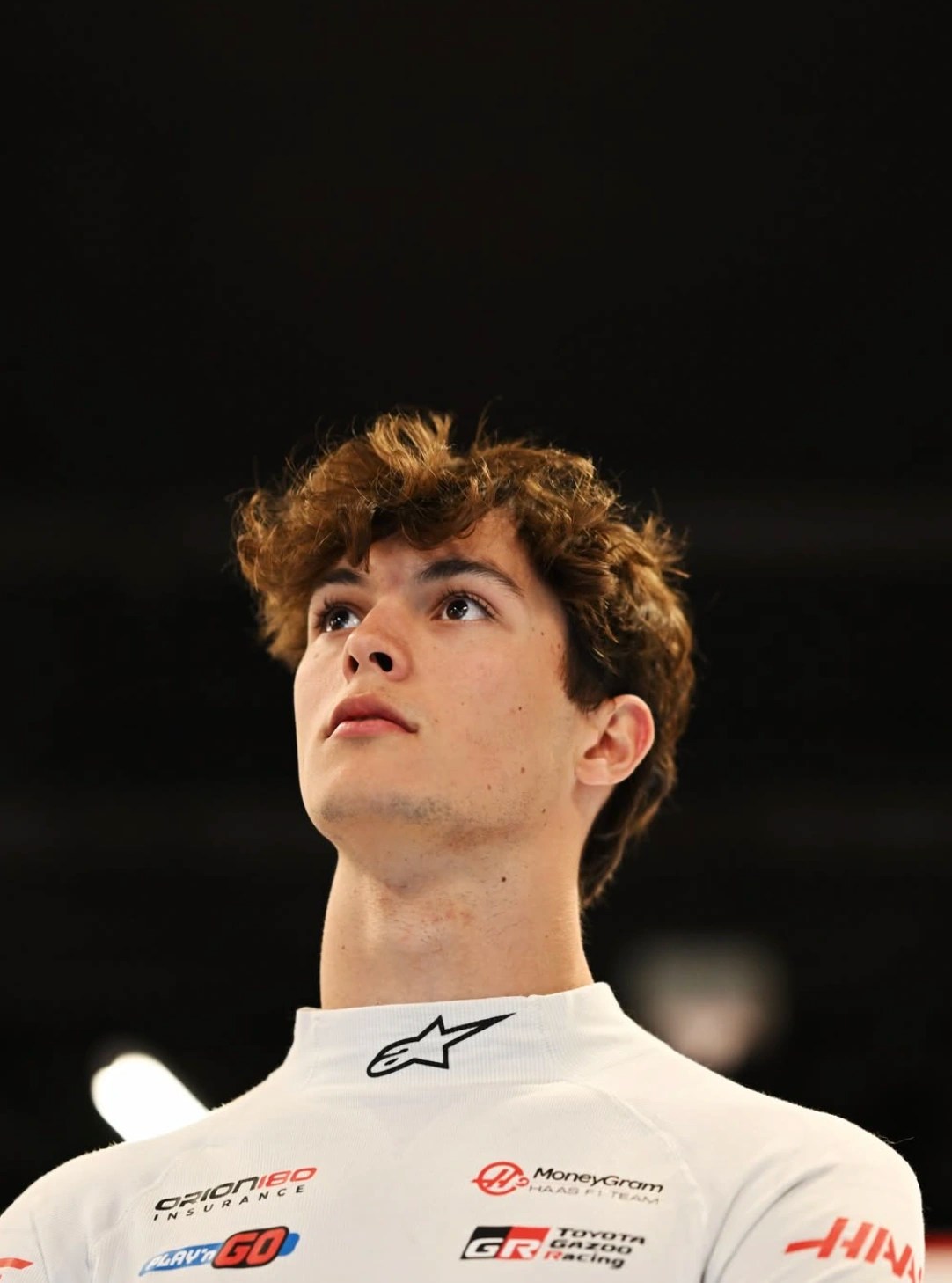
Oliver Bearman’s Formula 1 career is still in its early stages, but his form has already become one of the more intriguing stories in the midfield. For Haas, a team used to fighting with fewer resources than many rivals, Bearman has offered what a young driver should: pace, composure and the sense that something bigger may be developing. His performances have not been flawless, and the car’s limitations have become clearer as the season has progressed, but the overall direction of his rookie campaign remains encouraging.
Bearman’s reputation was built before he became a full-time Formula 1 driver, most notably through his composed substitute appearance for Ferrari in 2024. That drive created expectations that were never likely to be fair for a rookie joining Haas. Yet he has generally handled the attention well. What stands out is not only his speed, but the maturity with which he has approached difficult weekends. He rarely appears overwhelmed, even when the Haas package drops away from the sharp end of the midfield.
The early phase of the campaign gave Bearman his strongest platform. He scored points in Australia, produced a standout fifth-place finish in China, then added another point in Canada. Those three results have carried much of Haas’s season because the team is not a regular podium threat; for Haas, every clean points finish can shift a constructors’ championship battle. The numbers sharpen that picture. After 12 grands prix, Bearman sits 13th in the drivers’ standings with 18 points, no wins, no podiums and a best finish of fifth. His three scoring races represent a points-finish rate of 25%, while his best qualifying position is tenth and his average qualifying position is just over 15th. Across the opening dozen rounds, his average classified race result is around 14th, reflecting both the spike of China and the drag of retirements and lower-midfield weekends. Three races show why his form has attracted attention. In Australia, he started 12th and finished seventh, gaining five places and coming home as the leading driver outside the established front-running group. China was the headline performance: Bearman qualified tenth, recovered from first-lap disruption, used the safety car period effectively and converted the opportunity into fifth place and ten points. Canada was quieter but revealing. From 16th on the grid, he salvaged tenth despite Haas lacking pace, showing that he could turn a difficult weekend into a scoring one. The Chinese Grand Prix remains the clearest evidence of his ceiling. Starting inside the top ten and converting that into fifth showed more than opportunism. It showed Bearman could manage race pace, tyres and pressure when a result was available. Formula 1 is full of drivers who can deliver flashes of speed; fewer convert those flashes into disciplined Sunday execution. Bearman’s best weekends suggest he belongs in the second category. His season cannot be judged only by the highlights. A rookie campaign is usually uneven, and Bearman’s has included retirements, low grid starts and weekends where he has looked trapped by the car’s lack of performance. His qualifying average is not yet that of an elite midfield benchmark, and there have been races where Haas’s race pace left him unable to move forward. The important distinction is that many poorer results appear linked as much to machinery and team trajectory as to driver weakness.
The comparison with Esteban Ocon is therefore useful. Ocon brings experience, race craft and knowledge of Formula 1’s rhythms, so Bearman does not need to dominate him to prove his value. Even so, Bearman has made a strong statistical case: he has scored 18 of Haas’s 21 points, compared with Ocon’s three, and external head-to-head data has him ahead 8–3 in qualifying and 7–4 on race results when both drivers are counted. Haas’s best team result has also come through Bearman, underlining his importance to the team’s constructors’ position.
There is, however, a question about momentum. Since Canada, Bearman has not added to his points total, and results such as twelfth at Silverstone, fourteenth in Belgium and nineteenth in Hungary show how difficult it is to sustain a progress narrative when the car is not regularly competitive. Formula 1 is unforgiving: a driver can perform well and still vanish from the points conversation if the package lacks tyre life, straight-line speed or qualifying sharpness. One of the more encouraging aspects of Bearman’s form is his willingness to race assertively without looking reckless. Young drivers must find the balance between aggression and patience, particularly in a midfield where track position is precious. Bearman has shown sharp overtaking instinct, but his best results have come when he has combined that with restraint. That matters because Haas needs a rookie who can bring the car home as well as excite on Saturdays. The next stage of his development is consistency. Bearman has shown he can produce headline results, but the best midfield drivers build seasons through small gains: reaching Q2 when the car is marginal, protecting tyres, avoiding damage and converting eleventh into tenth when rivals stumble. If he can add repeatability to his natural pace, his form will begin to look less like rookie promise and more like long-term quality.
Overall, Bearman’s Formula 1 form should be judged as promising rather than complete. The peaks have been impressive, especially China, and his points finishes have given Haas valuable momentum in a tight midfield fight. The quieter weekends show there is work still to do, both for him and for the team around him. Yet the central impression is clear: Bearman looks like a driver growing into Formula 1, not merely surviving it. If Haas can give him a more consistent platform, his current form suggests he has the tools to become one of the defining young names of the next phase of the grid.

