By Luke Pons
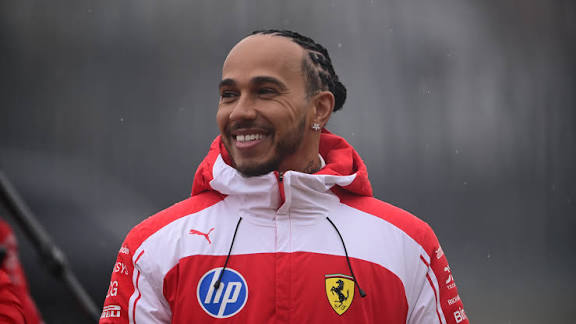
The seven-time Formula 1 World Champion Lewis Hamilton endured a dramatic and disappointing 2025 season following his high-profile move from Mercedes to Scuderia Ferrari at the end of 2024. For the first time in his illustrious career, Hamilton completed a full season without securing a single podium finish, bringing to an end a remarkable streak that had stretched back to his rookie year in 2007.
Hamilton’s struggles were emblematic of a wider Ferrari problem. The SF-25 proved difficult to extract consistent performance from, suffering from balance issues and a lack of outright pace compared with the leading teams. Ferrari failed to win a race throughout the campaign and ultimately finished fourth in the Constructors’ Championship, a result that fell well short of pre-season expectations given the scale of investment and the significance of Hamilton’s arrival.
For Hamilton personally, the transition proved more complex than anticipated. Adapting to a new team culture, engineering philosophy and car characteristics all at once created challenges that persisted throughout the year. While flashes of strong racecraft remained evident, particularly in changing conditions, they were rarely enough to offset qualifying struggles and strategic limitations.
A Regulation Reset Offers a Clean Slate
As Formula 1 looks ahead to 2026, Hamilton and Ferrari are presented with a rare opportunity for a full reset. The upcoming season introduces the most significant technical overhaul in decades, with sweeping changes to aerodynamics, chassis design and power units. The new regulations aim to improve sustainability, enhance racing and reduce long-term competitive advantages held by established frontrunners.
Hamilton has openly acknowledged that the new era represents one of the biggest challenges of his career. Yet within that challenge lies opportunity. Regulation resets have historically rewarded drivers with adaptability, technical understanding and experience, all hallmarks of Hamilton’s success across multiple eras of Formula 1. Rather than spending another season attempting to correct inherited flaws, Ferrari begins 2026 on equal regulatory footing with its rivals.
For Hamilton, the changes offer a chance to reassert himself in a landscape where previous reference points are no longer decisive. His ability to provide detailed feedback during early development phases could prove invaluable as teams race to interpret the new rules effectively.
Encouraging Early Signs From Testing
Early indications from pre-season testing have offered cautious optimism. During private running in Barcelona, Hamilton completed substantial mileage in Ferrari’s new SF-26, reporting that the programme was significantly more productive than the previous year’s disrupted preparations. Reliability, a recurring concern in 2025, appeared markedly improved, allowing Ferrari to focus on performance understanding rather than problem-solving.
Hamilton highlighted the importance of uninterrupted running, particularly during a season shaped by unfamiliar technical concepts. While headline lap times at this stage are largely inconclusive, the sheer volume of data gathered represents a positive foundation. Compared to the uncertainty that surrounded Ferrari’s early testing twelve months earlier, the 2026 programme has begun with greater stability and clarity.
Structural and Communication Changes at Ferrari
Ferrari has also made internal adjustments aimed at maximising Hamilton’s effectiveness. A new race engineer will be assigned to him for 2026, with the goal of improving communication flow, strategic execution and the translation of driver feedback into actionable setup changes.
For a driver who places significant emphasis on trust and precision within his engineering team, this change could be pivotal. Effective collaboration often proves decisive under new regulations, where marginal gains and rapid learning curves separate progress from stagnation. Ferrari’s willingness to adapt its structure reflects an acknowledgement that Hamilton must be fully supported if the team is to capitalise on his experience.
Qualifying and Consistency: The Key Performance Targets
One of the clearest areas for improvement in 2026 will be Hamilton’s qualifying performance. Throughout 2025, he frequently found himself starting races from lower positions than his historical standards would suggest. In modern Formula 1, where overtaking remains challenging despite regulatory efforts, grid position is often decisive.
The regulation reset provides an opportunity for Hamilton to re-establish his reputation as one of the sport’s most formidable one-lap performers. With all drivers adapting simultaneously to new machinery, early mastery of qualifying execution could yield significant dividends.
Consistency will also be crucial. New hybrid systems, altered energy deployment strategies and revised aerodynamics will test teams across varying circuits and conditions. Hamilton’s experience navigating previous regulation changes notably in 2014 and 2022 could help Ferrari avoid development dead-ends and maintain steady progress across the season.
Respect, Motivation and the Competitive Mindset
Despite a difficult year, Hamilton’s standing within the paddock remains intact. Rivals and analysts alike continue to emphasise that his 2025 struggles were circumstantial rather than indicative of decline. At 40 years old, Hamilton remains one of the most experienced drivers on the grid, with a competitive mindset forged through both dominance and adversity.
Motivation, often questioned during downturns, does not appear to be an issue. Hamilton has repeatedly spoken of his determination to compete at the highest level and his belief that unfinished business remains. That internal drive, coupled with Ferrari’s institutional ambition, creates a partnership still capable of meaningful success.
Conclusion: A Season of Opportunity
The 2025 season represented a rare low point in Lewis Hamilton’s career, defined by frustration, underachievement and unfamiliar struggles. Yet it may also serve as the catalyst for renewal. The 2026 regulation overhaul, encouraging early testing signs, internal restructuring at Ferrari and Hamilton’s enduring resilience combine to form a credible platform for recovery.
If Ferrari can deliver a fundamentally competitive SF-26 and Hamilton can quickly adapt while rediscovering his qualifying sharpness, the 2026 season could mark not just a bounce back, but a powerful reminder of why Lewis Hamilton remains one of Formula 1’s greatest competitors.

