By Joe Murphy
After the Ayrton Senna Retrospective article, (available here: https://wheel2wheelreports.com/2021/09/23/wheel2wheel-reports-an-ayrton-senna-retrospective/), the next installment in this series is of a record-breaking and history-making man.
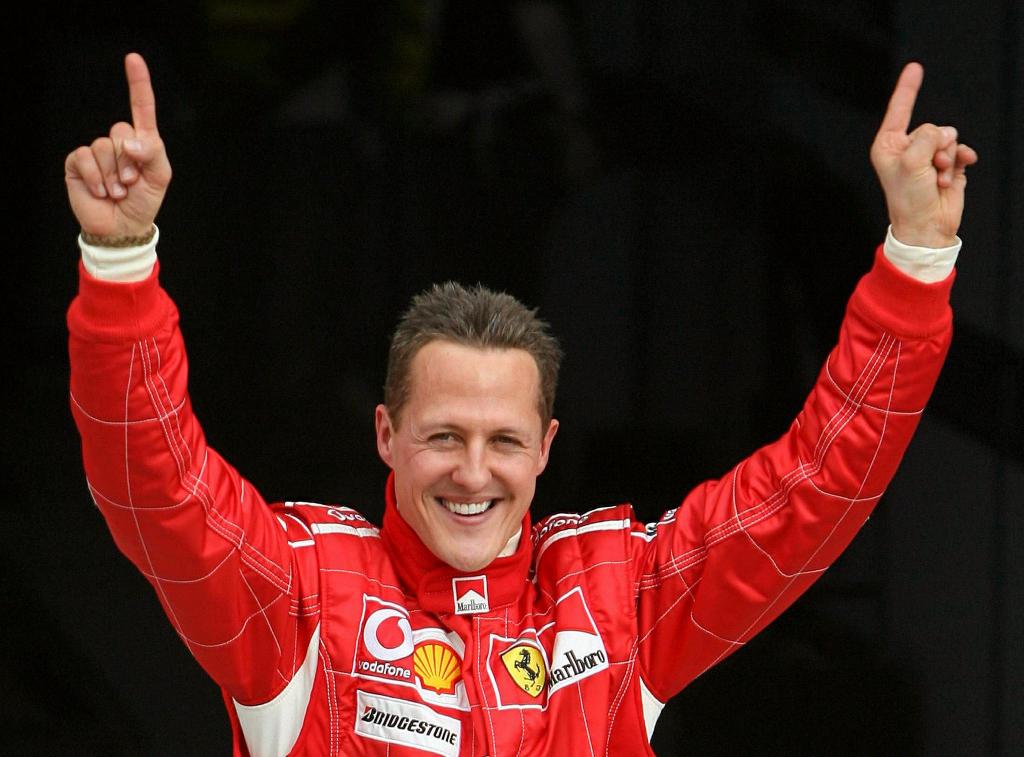
Michael Schumacher is unquestionably a legend of Formula 1, having won a joint-record seven World Titles during his illustrious career, racking up 91 wins and 155 podiums between 1991 and 2012. In a career that lasted the best part of two decades, the German driver has achieved records only bettered recently, by Lewis Hamilton.
Born in 1969, he started his career in 1991, debuting for Jordan in a single Grand Prix. He then moved to Benetton after 1 race and enjoyed success in his four years with the team. A move to Ferrari materialised and this is where Schumacher officially registered his name as a contender for one of the greatest of all time. A decade-long spell until 2006, Schumacher had an era of domination like we had never seen in the sport before. He then left the sport for a short hiatus in a sort of temporary retirement, before a two year farewell spell with German constructor, Mercedes. This time, he retired “properly” and cemented his legacy. Let’s, in more detail, run through the career of Michael Schumacher.
His debut drive for Jordan at Spa in 1991 surprised many within Formula 1. Here was a young and unknown man from the Mercedes sports car team. Things didn’t go overly well to start with as clutch failure ended his race within moments of it starting. He would never be seen in a Jordan again. Officially ending one of the shortest team spells in the history of the sport. Soon after, Flavio Briatore acted to get Schumacher out of the cockpit and got him into a Benetton for the very next race on the calendar.
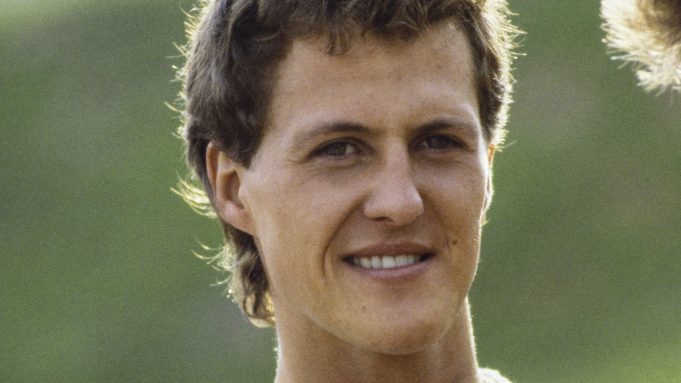
The following year, Schumacher successfully ended the dominant Williams team’s run of success with an opportunistic win at the track where he made his debut. An off-track incident gave him the opportunity to look at his team mate’s tyres as the wet circuit became more dry. The German made the call to switch to slick tyres earlier than others on the grid and, illustrating skill and craft older than his age, won the race. Another victory followed in 1993, when Schumacher comprehensibly beat Alain Prost in Portugal.
1994 came next and the way became clear for Schumacher to take the next step in his career by competing for the World Title. Most of the recent champions had finished in the sport or were on their way out. Furthermore, a few races into the season, Ayrton Senna was killed at Imola. By the end of the year Schumacher had won nine of the 16 races on way to his first Championship. It came in dramatic and infamous circumstances too when, under intense pressure from Hill, Schumacher went off and damaged his car. Seeing his promised title slip into away he swung into the side of Hill’s car as the Williams driver moved to pass him, taking both out and securing the title for himself. Controversial, but it was the German’s name in the history books.
His second title in 1995 was achieved with less controversy and more displays of driving greatness. The season got off to a slow start but once Schumacher got into his stride the wins came frequently. Having conquered F1 with Benetton, Schumacher aimed to do it all over again with Ferrari. It took the German driver five years to bring the drivers’ title home to the Scuderia.
With Ross Brawn rejoining him for the 1997 season, Schumacher was ready for another shot at the title. He consistently took points off rival Jacques Villeneuve despite the Williams clearly a better and faster car. In wet conditions, however, Schumacher was in a class of his own. This was particularly evident at Grand Prix seen as Monaco and Spa, that year.
In 1998 Schumacher faced a stronger opponent. His former F3 rival Mika Hakkinen. The championship that year went down to the wire at Suzuka where Schumacher started from pole position, only to fall down the order after his car overheated on the line and wouldn’t start. Schumacher’s day and misery was compounded when a puncture finally ended his hopes and confirmed the Finn as the champion.
Similar circumstances amassed the following year where Schumacher’s 1999 championship bid ended when his right-rear brake failed at Silverstone on only the first lap of the race. His car hurtled off the track at Stowe, plunging head-on into the barrier, resulting in a broken injury. This incident would prove to be the nail in the coffin regarding his title hopes. Hakkinen took further advantage to double his World Championship tally.
Ferrari’s wait for their next drivers’ championship finally ended in 2000. Now partnered by Rubens Barrichello, Schumacher won the first three races of the season. After literally racing away with the title, he wouldn’t let go of the trophy for five years. Schumacher redefined the terms of domination in Formula 1. He won nine races in 2001 and 11 in 2002. He was unstoppable. No cars were able to compete with the Ferraris – and it was clear from events at Austria in 2001 and 2002 (where Barrichello was twice ordered to pull over and let Schumacher past), that Ferrari were not interested in pairing him with any kind of serious rival. He was their first driver, make no mistake about it.
By the time 2002 rolled around, MSC and his car enjoyed one of the most dominant seasons the sport has ever seen. The F2002 didn’t let Schumacher down one a single occasion. Furthermore, he finished every race that year on the podium, and set a new record by winning the world championship with six races to spare.

The 2003 season proved much more closely matched as Schumacher was challenged by the likes of Kimi Raikkonen and Juan Pablo Montoya. With a controversial mid-season tyre change introduced by the FIA, Ferrari won the next eight races, with Schumacher collecting title number six. In 2004 Schumacher pushed Ferrari’s devastation of the F1 competition to previously unseen levels. He won 12 of the opening 13 races, and might have won the anomaly in Monaco but for a collision with Montoya.
2005 saw an end to the domination of Schumacher, caused by a change in the technical rules. In that year, tyre changes during the race were banned, forcing both tyre companies to build harder compounds. As a result, Schumacher won just once all year, that being the infamous United States Grand Prix where only the six Bridgestone runners competed. The tyre rules were changed back for 2006 and Ferrari were back on form. But Schumacher faced a tough new challenger in the form of Fernando Alonso. While Alonso managed four consecutive wins, Schumacher hit back with a hat-trick of his own as the campaign progressed. It brought out the best and worst in Schumacher yet again. From his monumental win in Shanghai to his Monaco qualifying stunt, it wasn’t a year short of talking points. He eventually fell short to the Spanish driver, and looked to bow out of the sport following the Brazilian Grand Prix that year.
However, his appetite for the sport hadn’t gone anywhere. Schumacher later confirmed he would be returning to F1 again, this time for Mercedes. In his first season, however, Nico Rosberg seemed a lot more comfortable in the Silver Arrow.
Despite some pretty desperate-looking driving, Schumacher stuck with it and the situation seemed to be improving towards the end of the season, reaching the heights of fourth place.
Schumacher’s second season with Mercedes also had it’s ups and downs. There were mete glimpses of his old form, but then also a number of poor qualifying sessions and racing incidents/collisions.
Yet again, he finished the season behind teammate Rosberg, but was considerably closer than he had been the previous year. The final year of Schumacher’s comeback did see him return to the podium in Valencia, but the Constructor never looked overly competitive. With the German not committing to a further year to his deal, Mercedes moved to sign Lewis Hamilton for 2013 leaving the German to make a heavily expected second retirement.

He finally signed off with a final points finish in Brazil, symbolically pulling over for Sebastian Vettel as his fellow German won his third world championship.
A year later, Schumacher fell while skiing in France and suffered serious head injuries. Following a lengthy stay in hospital he returned home, but since the accident there was little information about his condition from the Schumacher family. ‘Schumacher’, a documentary on Netflix released in 2021, gave audiences a fascinating insight into the man and his family, although no clarity into his current situation was given. Understandably, privacy has been the name of the game surrounding the seven-time World Champion’s health. That being said, the Schumacher family confirmed that he continues to receive treatment for his injuries, with Schumacher’s son, Mick, revealing that he is unable to discuss his own F1 racing career with his father.
It would be a travesty if Michael Schumacher was remembered more for his accident, than his domination in F1. Despite some antics over the course of his career, he has deservedly been recognised as one of the greatest to ever do it. No driver has ever won more World Titles. Perhaps, with Lewis Hamilton looking off the pace for the foreseeable future, nobody ever will.
 WHEEL2WHEEL REPORTS
This is so nice
LikeLiked by 1 person