By Kayleigh Northall.
After three brutally early starts to the Formula 1 season, the promise of a five‑week break and a civilised alarm clock felt well earned. That illusion didn’t last long. Hurtling down the fast lane came the British GT Championship, with its media launch scheduled—naturally—for another early morning. Coffee in hand, heavy coat slung over one arm and press pass safely stowed, I headed south on the M1, bound once again for the spiritual home of British motorsport.
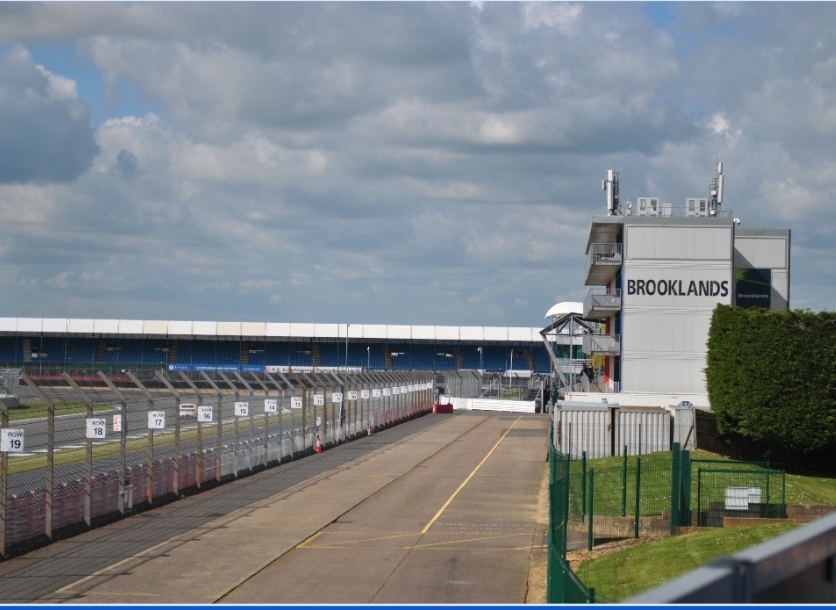
Silverstone never fails to stir something. Cold, windswept, and unmistakably alive with history, the former RAF airfield in Northamptonshire has hosted motorsport of every kind since 1948. Standing trackside, it’s hard not to wonder how wartime pilots ever landed here in the relentless crosswinds. Yet it was precisely this expanse of concrete and open space that offered post‑war Britain a solution to a pressing problem.
In the late 1940s, the Royal Automobile Club, under the chairmanship of Wilfred Andrews, was determined to bring Grand Prix racing back to Britain. Public road racing, as seen on the Isle of Man or in the Channel Islands, was impossible on the mainland, and the austerity of the era ruled out building a purpose‑made circuit. The answer lay in the abundance of disused RAF airfields scattered across the country. Two stood out: one near Snitterfield, close to Stratford‑upon‑Avon, and another behind the village of Silverstone. The latter, still under Air Ministry control, was leased in August 1948, and plans moved quickly to create a racing circuit where bombers once stood. James Brown was tasked with the formidable challenge of designing the track in under two months. Using the perimeter roads and intersecting runways, marked out with oil drums and straw bales, Silverstone hosted the British Grand Prix just weeks later. Around 100,000 spectators stood behind rope barriers, officials worked from tents, and history was made. Nearly four decades later, Brown would pass away while still employed by the circuit he helped create—a fitting if poignant reminder of Silverstone’s living legacy.
That sense of heritage is one of the defining features of British motorsport. It often feels less like a single discipline and more like a living museum, shaped by tradition, famous families, and stories passed down through generations. Understanding that history adds depth to the modern spectacle. Corner names, vintage clothing in the crowd, and classic cars in family garages all tell a story that stretches back more than a century. From Brooklands—the world’s first purpose‑built motor racing circuit, opened in 1907—to the post‑war heroes like Stirling Moss, Britain’s relationship with racing has always been intense and deeply personal. The rise of teams such as Lotus and McLaren between the 1950s and 1970s cemented the country as a global centre of engineering excellence, while touring car racing in the 1980s and 1990s brought motorsport closer to everyday drivers by turning familiar road cars into wheel‑to‑wheel contenders.
Today, that heritage feeds directly into the British GT Championship. Created in 1993 by the British Racing Drivers’ Club, the series has evolved into one of the most competitive and diverse sports car championships in Europe. Now run by SRO Motorsports Group, British GT balances professional ambition with accessibility, a trait reflected in its multi‑class structure. The championship currently features GT3 and GT4 machinery. GT3 cars represent the pinnacle, governed by balance‑of‑performance regulations that ensure close racing across different manufacturers. GT4, by contrast, is designed as a development category, with cars that remain closer to their road‑going counterparts, helping to control costs while nurturing talent. Together, the classes provide a compelling mix of outright speed and emerging potential.
The media launch marks the first real taste of the season ahead. Engines are fired, cameras click, and teams finally roll their cars onto the 3.6‑mile Silverstone circuit. Sixteen teams make up the 2026 grid, fielding 26 cars across eight rounds between April and September. Familiar venues such as Silverstone and Donington are joined by the iconic Spa‑Francorchamps in Belgium, whose inclusion adds international prestige and reflects British GT’s place within the wider SRO endurance racing landscape.
The entry list blends experience with fresh ambition. Established names like Barwell Motorsport, Beechdean Motorsport, and Optimum Motorsport return alongside newcomers Rodin Motorsport and West Surrey Racing. The grid itself is a showcase of automotive excellence, featuring Aston Martin, McLaren, Ferrari, BMW, and Lamborghini machinery across both classes. Driver line‑ups are equally compelling. Returning champions and series stalwarts are joined by well‑known names from other disciplines, including Colin Turkington in the BMW M4 GT4, Darren Turner and Ronan Pearson in the Aston Martin Vantage GT4, and Rob Collard piloting the Lamborghini Huracán GT3. Ross Gunn’s presence in the Aston Martin Vantage GT3 further underlines the depth of talent on display. Alongside them are the championship’s newest faces. Rookie drivers such as Branden Templeton and Kenzie Beecroft represent the future of the series, stepping onto one of the UK’s most competitive stages with the opportunity to make an immediate impression. Their progression will be watched closely as the season unfolds.
As the British GT Championship prepares to roar back into life, Silverstone once again proves why it remains central to British motorsport’s identity. From its wartime origins to its role as a modern racing hub, the circuit embodies the blend of history and innovation that defines the sport in this country. British GT carries that legacy forward—balancing tradition with technological progress, established names with rising stars, and national pride with international ambition. Another early alarm may be required, but as engines fire and the season begins, there’s no doubt it’s worth it. British GT is back, and with it comes a reminder that in motorsport, the past doesn’t sit quietly behind us—it powers the road ahead.
 WHEEL2WHEEL REPORTS