By Will Heys
Every Formula 1 driver, at some point in their career believes they have what it takes to become the Formula 1 world Champion.
However, when that driver finds themselves as the ‘number two’ driver within their team, a lot of that confidence starts to peel away.
No driver wants to be second, and some like Daniel Ricciardo have gone as far as leaving a top team like Red Bull to be a team leader at a project elsewhere.
As a rookie, Kimi Antonelli will have spent the majority of his 2025 season learning as much as he could from team leader George Russell and Bono.
Being a constructor’s second driver does not mean they are slower or less capable.
Often, it means the project the team has envisioned is centred around their number one whether that’s openly acknowledged or not – looking at you Red Bull.
In this instance, the number two is expected to support that project: scoring points, podiums and when absolutely necessary, getting out of the way.
The psychological weight of this role is enormous.
It can attack some of the core identities required to be competitive in motorsports creating a clash between a driver’s ego, ambition and reality.
Modern F1 drivers arrive to the championship having dominated junior categories, only to join a team to be told you are supporting your teammates greatness.
You are good enough to win, but your role is to make sure someone else secures victory.
Reality was laid out at the 2010 British Grand Prix where Mark Webber beat his teammate and eventual world champion Sebastian Vettel.
In his race winning radio message he said, “Fantastic, guys, not bad for a number two driver. Cheers.” saying out loud what all drivers in his position secretly thought.
Some drivers lean into the role and make their occasional small victories into celebrations of achievement.
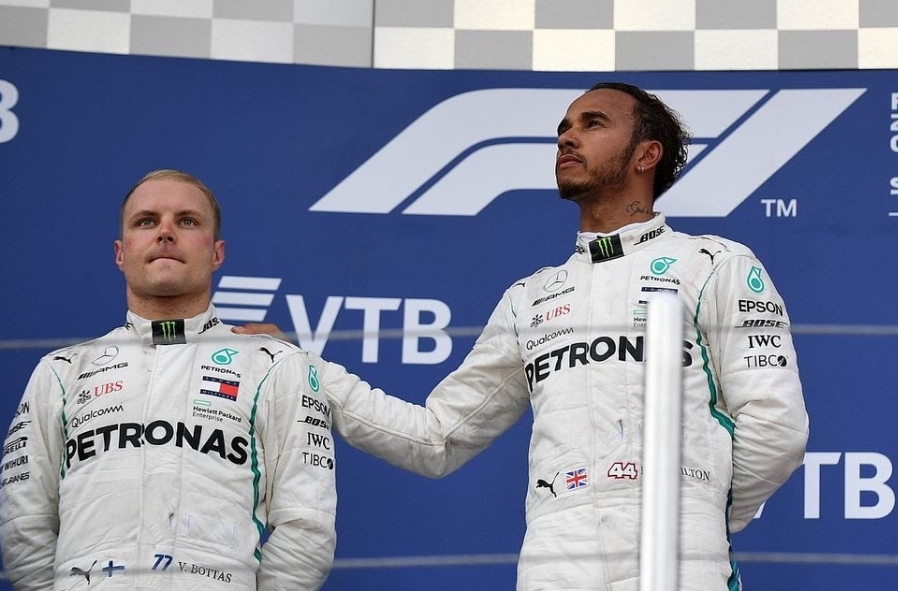
Valtteri Bottas’s time at Mercedes is a clear recent example having the prime of his career defined against Sir Lewis Hamilton.
Bottas was fast enough to win races and resilient enough to accept the defined hierarchy at Mercedes from 2017.
Toto Wolff never asked Bottas to pretend the hierarchy didn’t exist.
The expectations were clear and roles defined and because of that, five constructors and four drivers championships followed.
The Finn delivered stability to allow Hamilton to dominate the ‘high downforce’ era.
Contrast that with arguably the sports best number two driver, Rubens Barrichello.
Publicly loyal and privately confident spent years in other people’s shadows like Michael Schumacher and Jenson Button.
In his years at Ferrari, he would sacrifice victories for Schumacher and the team’s success.
The Prancing Horses flourished but the psychological toll was evident as Barrichello was not slower, but he was constrained, and history remembers him accordingly.
Some teams like McLaren argue that the solution is to avoid hierarchy altogether.
They have leaned heavily into this philosophy promoting an “equal” environment under so-called ‘papaya rules’.
Lando Norris has now proven himself a world champion but he drives alongside Oscar Piastri, widely viewed as a future champion.
The approach appears harmonious, a match made in heaven, for now.
But motorsports history suggests that equality only works until championships are at stake.
When margins tighten and titles come into view, teams are inevitably forced to choose.
Two ‘number ones’ may raise performance ceilings, but they risk internal conflict at the very moment unity matters most.
Ultimately, a number two driver remains a valuable part of the team, vital to success.
Formula 1 rewards belief, yet the role demands controlled compromise asking drivers to balance personal ambition against the success of the team.
Some adapt, some resist, and others leave entirely in search of validation elsewhere.
The most successful operations define expectations early and understand that psychological stability can be just as valuable as raw pace.
In the end, being a number two at the sharp end of the grid is not a mark of inferiority, but a reflection of Formula 1’s brutal reality: only one driver can be champion, but no champion succeeds alone.
 WHEEL2WHEEL REPORTS