By Ciara Casey
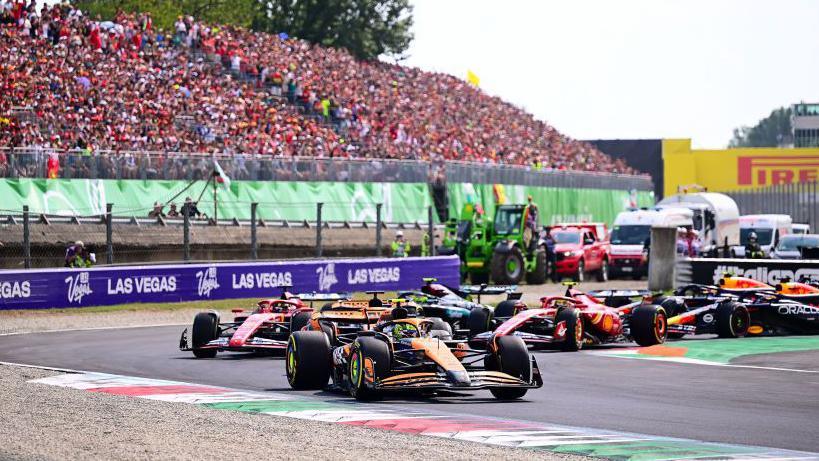
Monza is one of the few historic tracks remaining on the Formula One calendar.
Formula one has visited Autodromo Nazionale Monza in every season but one since 1950. The track was constructed in 1922 and although the track has changed slightly over the years the heritage of the track remains.
Despite the original banking no longer being a part of the F1 track due to safety concerns, the banking still remains just behind the track. Teams regularly still head back there and visit the heritage site.
Despite Monza being known for epic races and amazing on track battles, it has also seen its share of tragedies. In 1928, driver Emilio Materassi lost control of his car on the finishing straight and crashed into spectators lining the track, resulting in the deaths of 20 people and injuries to more than 40 others. Five years later, in 1933, tragedy struck again during the second heat of the Monza Grand Prix, a support race to the main Italian Grand Prix. On the opening lap, Giuseppe Campari hit an oil slick at the entrance to the south banking, veered off the circuit, and overturned into a roadside ditch, dying instantly.
In response to these devastating accidents, officials introduced several changes to the circuit to try slowing the track down and improve safety and prevent further accidents.
It is also known that the ‘Temple Of Speed’ is home race to Italian based team Ferrari, who are the most successful team at Monza, winning 20 wins. With Charles Leclerc holding the most recent Ferrari wins, both the 2019 and 2024 Italian Grand Prix. The Tifosi (Ferrari fans) are passionate fans and are always filling the stands to cheer for their Scarlet Red team.
Monza has an array of history and is certainly deserving of its place on the Formula One calendar. The Italian circuit will remain on the calendar till at-least 2031 however its great legacy and outstanding races prove exactly why this track should be going nowhere and the track should remain respected by all fans and teams.
 WHEEL2WHEEL REPORTS