By Cassandra D’Angelo
Scuderia Ferrari was founded in 1929 by Enzo Ferrari. By 1947 Ferrari was building its own cars to compete on an amateur level.
Since the Formula 1 Championship was established in 1950 Ferrari has been the only team to compete in all 75 seasons.
Ferrari has seen success throughout its 75 years in Formula 1.
“At Ferrari the most beautiful victory is always the next one,” Enzo Ferrari told reporters at Monza in 1986.
1950s:
Scuderia Ferrari debuted on the world stage at the Monaco Grand Prix on May 21, 1950. Alberto Ascari finished second while driving a 125 F1.
Ferrari won its first race the next season in Great Britain with José Frolián González behind the wheel.
This was the start of Ferrari’s dynasty of success.
1953 and 1954 saw the Prancing Horse dominate race victories. Ascari took home the championship in back-to-back seasons.
After a change in regulation Ferrari struggled to find pace until Juan Manuel Fangio joined the team in 1956. Fangio secured the championship before returning to Maserati.
The Constructors’ Championship was established in 1958. Ferrari failed to win the title the first season, but Mike Hawthorn claimed the Drivers’ Championship.
1960s:
Ferrari debuted its rear-engine car, the 246 P F1, in 1960.
1961 saw Ferrari return to championship form. Phil Hill won the Drivers’ title and the team won the Constructors’ Championship for the first time.
The team faced change and turmoil throughout the next two years with personnel turnovers and slow technological development.
A slower car, but higher reliability brought Ferrari and John Surtees the championships in 1964.
The rest of the decade was marred by Ferrari’s decreasing form and continuous personnel changes.
Enzo Ferrari sold part of his road car business and put the money back into the struggling racing team.
1970s:
The Prancing Horses had a stronger 1970 season with four wins and Jacky Ickx finishing second in the championship.
The next three seasons were increasingly disastrous with Ferrari finishing sixth in the Constructors’ Championship in 1973.
1974 saw the Scuderia return to form with the signing of Niki Lauda and the development of the 312 B3-74. Clay Regazzoni and the team both narrowly missed out on winning the championships due to the lack of reliability in the car.
Ferrari was back to top form in 1975 taking the Drivers’ and Constructors’ titles thanks to the newly designed 312 T. Lauda and Regazzoni were involved in the design process and the team produced a fast and reliable car.
Maintaining his form, Lauda was successful in the first half of the 1976 season until a crash at the German Grand Prix. Although Lauda had a quick return to racing, he lost out on the Drivers’ title to James Hunt. Ferrari took home the Constructors’ Championship again in 1976.
Despite winning another title in 1977 with Ferrari, Lauda left at the end of the season for Brabham. Ferrari continued its streak by winning a third Constructors’ title in a row.
1978 was characterized by wins for the team, but the 312 T3 was outraced by the Lotus.
The last season of the decade was a successful one with Jody Scheckter winning the Drivers’ title and Ferrari taking home the Constructors’ trophy.
Ferrari would not win another Drivers’ Championship for the next two decades.
1980s:
Ferrari failed to win a title in the first two seasons of the decade. 1981 was characterized by the new turbocharged engine.
The 126 C was a powerful car and had the best balance between reliability and speed on the grid. The team won the Constructors’ title in the 1982 season. After the death of Gilles Villeneuve and injury of Didier Pironi, the team failed to win the Drivers’ title.
The team won the Constructors’ Championship again in 1983, but once again missed out on the Drivers’.
Ferrari failed to challenge the McLarens the next season, but challenged Alain Prost for the title in 1985 before losing form in the second half of the season.
The team’s lack of form continued until the end of the 1987 season when Gerhard Berger won two races.
McLaren continued to dominate in 1988 and Ferrari finished second in the Constructor standings.
Enzo Ferrari died on August 14, 1988 leaving his share to his son Piero Ferrari.
After years of lobbying the FIA, even going so far as to build an IndyCar, the regulations were changed and the era of turbocharged engines ended. With the regulation changes John Barnard, technical director, created a semi-automatic, paddle-operated gearbox.
In the 1989 season the car was extremely unreliable; however, Nigel Mansell secured multiple wins for the team.
1990s:
The 1990 season saw the arrival of Alain Prost to Ferrari. Despite a hard-fought battle and a controversial crash, Prost lost the championship to Ayrton Senna.
Ferrari saw a shift in form in 1991 when teams transitioned to the lighter V10 engines compared to Ferrari’s V12.
The team failed to win a race until the German Grand Prix in 1994. Fuel consumption and reliability issues still plagued the Prancing Horses throughout the 1995 season.
Michael Schumacher moved to Ferrari in 1996 along with members of Benetton’s technical staff. Reliability issues continued, but Schumacher won three races during the 1996 season after Ferrari switched to a V10 engine.
The 1997 season almost saw Ferrari at the top again, but after the dramatic season finisher at Jerez saw Schumacher disqualified, Ferrari finished second in the standings.
With new regulations the next season Ferrari had a competitive car with the F300. Schumacher won six races, but once again failed to win either title.
Ferrari returned to its former glory in 1999 by winning the Constructors’ Championship for the first time in over a decade. Due to a crash at Silverstone, Schumacher was out of contention for the Drivers’ title and Eddie Irvine finished second in the standings.
2000s:
Schumacher’s years of wins at Ferrari finally culminated in a Drivers’ Championship in 2000. It was the first Drivers’ title taken by a Ferrari driver since 1979. The Prancing Horses also won the Constructors’ title.
The next two seasons Ferrari dominated with Schumacher and the team acquiring two more consecutive championships. Ferrari won 24 of 34 races between the 2001 and 2002 seasons.
The 2003 season saw competitiveness return to the grid with McLaren taking an early lead in the championship. The titles came down to the final race, and in the end Schumacher and Ferrari both held the championships.
Schumacher and Ferrari began dominating again the next season and easily wrapped up both championships early. It was Schumacher’s seventh championship and Ferrari’s 14th.
2005 saw Ferrari’s pace and reliability fall off compared to the rest of the grid. Ferrari walked away from the season with only one win.
Schumacher’s last year on the grid was 2006. Ferrari had rediscovered its form with the new 248 F1, but fell short of reaching either title.
The next season was the first without Schumacher in a Ferrari since 1996. His replacement, Kimi Räikkönen, not only won on his Ferrari debut, but also won the Drivers’ Championship.
2007 was a season marred by espionage controversy and trials. However, Ferrari ended the season with another Constructors’ title.
The F2008 was a strong car during the next season and brought Ferrari another championship, despite neither driver winning the Drivers’ title. It was the last title Ferrari has won.
The 2009 season was another disappointing one for the Prancing Horses with only one recorded win.
2010s:
The start of the decade saw Fernando Alonso narrowly miss out on the Drivers’ title.
The next four seasons saw Ferrari consistently out of the fight for a title. 2013 was Ferrari’s first season without a win since 1993.
When Sebastian Vettel won the Malaysian Grand Prix in 2015 he broke Ferrari’s 34-race streak without any wins. Mercedes dominated the season, but Ferrari finished second in the standings.
After a disappointing 2016 season, Ferrari was able to compete with the powerful Mercedes in 2017. After Vettel won the first race of the season it was the first time a Ferrari driver had led the championship since 2012. Despite strong outings, Ferrari failed to win either title that season.
2018 was another season where despite having a strong car, Ferrari and Vettel were outpaced by Mercedes.
Charles Leclerc joined the team for the next season. Leclerc and Vettel won three races in 2019, marking the last Ferrari race win for over a year.
2020s:
The Tuscan Grand Prix in 2020 marked Ferrari’s 1,000th Grand Prix. It was a year that ended with them sixth in the standings.
2021 was another winless year with the SF21 finishing third in the championship.
When Leclerc won in Bahrain in 2022 it ended the team’s 45-race winless streak. Although Ferrari had a strong start to the 2022 season, it ended with second in both standings.
2023 was a season characterized by Red Bull domination; however, Carlos Sainz secured Ferrari’s only win of the season in Singapore.
Ferrari had good pace during the 2024 season and walked away with five wins. The team narrowly missed out on the Constructors’ title, ending the season in second.
The 2025 season was another tough one for the Prancing Horses. It was a winless season with a fourth-place finish in the standings.
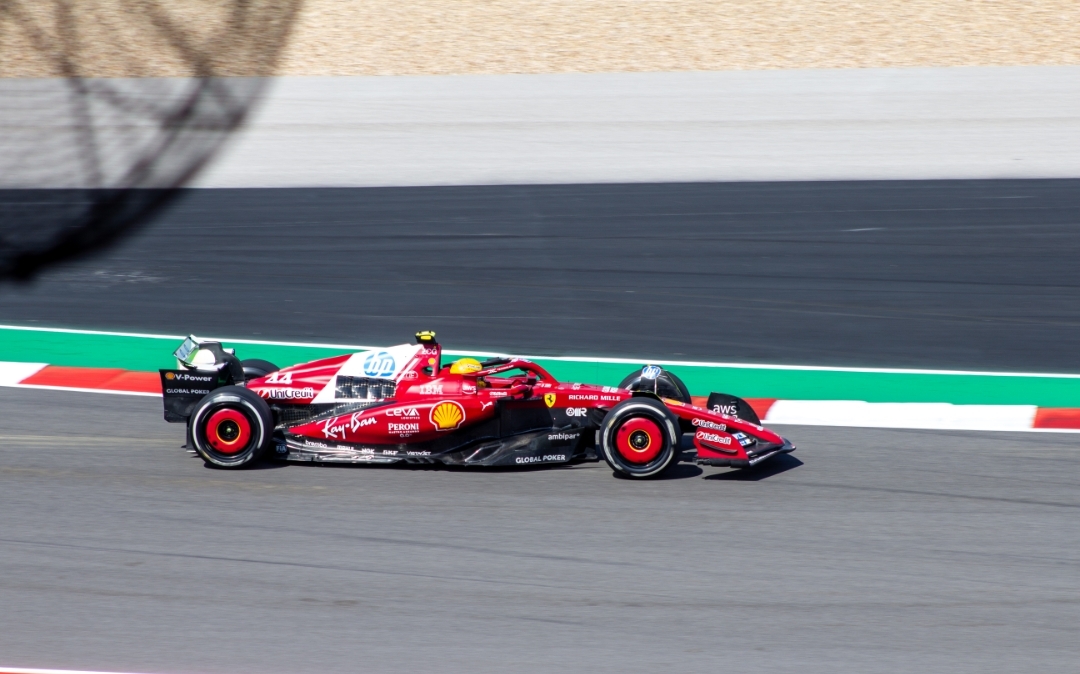
With the 2026 season opener quickly approaching many people wonder how Ferrari will fare with new regulations. The tifosi hope to add a 17th Constructors’ Championship and bring back the trophy to Maranello that has been gone for almost two decades.
Lewis Hamilton has said he feels “the winning mentality in every single person in the team more than ever.”
The Ferrari Dynasty: 70 Years of F1 Success
 WHEEL2WHEEL REPORTS