By Isabel Clark
Out with the old and in with the new: ‘DRS’ replaced by active aerodynamics
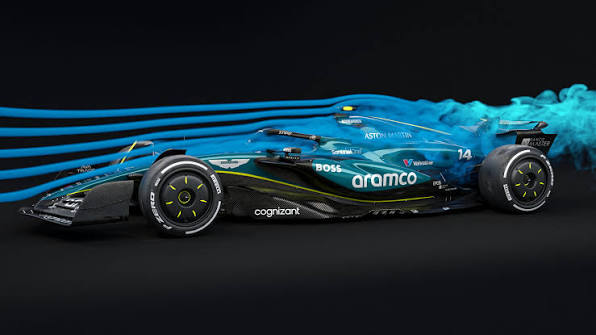
Following the biggest regulation change the sport has seen in over a decade, Formula One has bid farewell to the Drag Reduction System (DRS) in 2026. Lining up on the grid instead, is a cumulation of systems that form a new active aerodynamic package designed to improve competition, efficiency and energy management.
Rather than relying on a single moveable rear-wing element, the new system allows drivers to alter the car’s aerodynamic configuration in response to the situational demands of the circuit.
Two Modes:
Previously limited to the rear wing, DRS enabled drivers to reduce aerodynamic drag and increase top speed on designated straights. From 2026, however, both the front and rear wing angles can be adjusted at the push of a button. To fully exploit the car’s power while enhancing grip, two new configurations — Corner Mode and Straight Mode — have been introduced.
Corner Mode will serve as the default setting and is designed to enhance cornering performance. In this configuration, the wings will be in their normal position allowing the car to increase downforce and grip, meaning drivers can attack at higher speeds while pushing the limits of control on corners.
Straight Mode closely mirrors the previous DRS concept. Used on the straights, wing angles will flatten to reduce drag and increase straight line speeds: aiding overtaking manoeuvres.
Boost Mode:
Debuting in 2026, Boost Mode allows drivers to strategically deploy extra power at any point on the circuit, whether attacking or defending. Activated via the steering wheel, adjustments to the new power unit settings allow delivery of maximum combined output from the internal engine and the battery, provided sufficient energy is available.
While the cars will continue to run 1.6-litre hybrid V6 turbo engines for 2026, there is a 50/50 split between electricity and fuel: a clear signpost to Formula One’s net zero sustainability goals by 2030.
Recharge Control:
Compared with previous seasons, the new power unit allows the energy recovery systems to recharge the battery with roughly twice as much energy per lap. As ever, race engineers will work closely with drivers to exploit that potential by devising precise strategies to harvest energy under braking, during throttle lift at the end of long straights, and through partial power application in corners.
Overtake Mode:
Another significant innovation for 2026 is the introduction of Overtake Mode. Similarly to the boost function, it provides drivers with additional electrical energy, but only when they are within one second of the car ahead and are actively attacking. Because the system relies solely on electrical power, overtaking is expected to become less automatic and more tactical, forcing drivers to carefully judge when to deploy the energy they have harvested.
Unlike DRS, which operated across multiple activation zones, Overtake Mode will operate from a single detection point at each circuit. Giving drivers the freedom to deploy all the available power in one burst or manage it strategically across the lap.
These technological adaptations, reflect advances increasingly seen on high-profile road cars. The use of actuators to control airflow, alongside reduced ground-effect reliance and flatter floor designs, will give teams greater setup flexibility across a race weekend.
With more variables in play and an added layer of strategic complexity, teams and drivers must strike a careful balance between cornering performance and straight-line speed — a shift that promises closer, less predictable racing in the new era.
 WHEEL2WHEEL REPORTS