By Fernanda Anselmo
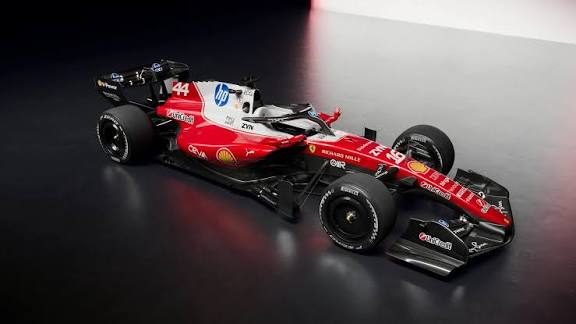
Ferrari unveiled the SF-26 this Friday (22) in Fiorano, Italy. The car will be driven by Lewis Hamilton and Charles Leclerc in the 2026 Formula 1 season. The launch took place at the team’s private test track in Maranello and was followed by the first shakedown of the new model, officially marking the start of a new technical cycle for the iconic Italian team.
The reveal of the SF-26 delivered not only the car’s first on-track laps, but also a new visual identity. The livery directly references one of the most iconic cars in Ferrari’s history, the 312 T, driven by Niki Lauda in the 1970s. The traditional Ferrari red remains the base color, now combined more prominently with white, creating a classic look that also extends to the drivers’ race suits. The sides around the cockpit and a large portion of the engine cover are finished in white, blended with sponsor logos, reinforcing the historical nature of the tribute.
More than an aesthetic statement, however, the SF-26 represents a conceptual break. The car has been developed entirely under Formula 1’s new technical regulations, which come into effect in 2026 and represent one of the most significant transformations in the category’s history.
What changes in Formula 1 from 2026 onward
The 2026 season ushers in a new era for Formula 1, with deep changes to power units, aerodynamics, and overall design philosophy. For the first time in the sport’s history, power units will feature an even split of energy output: approximately 50% from the electric motor and 50% from the internal combustion engine. This new balance completely reshapes driving style, energy management, and racecraft throughout a Grand Prix.
Another cornerstone of the regulations is the introduction of 100% sustainable fuel. Produced without fossil components, it maintains performance levels while drastically reducing environmental impact, aligning Formula 1 with its carbon-neutrality goals.
On the aerodynamic side, ground effect will be eliminated. In its place come cars with lower overall downforce, simpler solutions, and the introduction of active aerodynamics. Front and rear wings will feature movable elements, allowing drivers to adjust wing angles during a lap. This system replaces the traditional DRS and demands greater strategic awareness during races.
With less downforce and reduced drag, the 2026 cars are expected to be more challenging to drive. The new technical package should place even greater emphasis on car control, adaptability, and driver talent, making mistakes more costly and performance less dependent purely on aerodynamic efficiency.
Within this context, the integration between chassis and power unit has become a critical factor. Ferrari is betting precisely on this synergy as a competitive advantage, having worked from the very beginning of the project with a joint focus on energy efficiency, weight distribution, and overall vehicle dynamics.
The decision to shift focus early toward the 2026 cycle was also influenced by the disappointing performance of the SF-25. The previous model represented a clear step backward compared to the car that had fought for the Constructors’ Championship the season before. Major conceptual changes—such as a redesigned rear suspension adopting a pullrod layout and an increased wheelbase—were introduced to improve stability and aerodynamic performance, but failed to deliver the expected results. The team was forced to accelerate upgrades throughout the championship, without consistent success.
Now, with the SF-26, Ferrari aims to definitively turn the page and re-establish itself as a front-runner in a new Formula 1 era. The project featured active involvement from Lewis Hamilton and Charles Leclerc, particularly through feedback on drivability and low- and medium-speed corner behavior—key areas under the new regulations.
Attention now turns to the track. Formula 1 returns to action between January 26 and 30 with private testing in Barcelona. The teams will then head to Bahrain for two more pre-season test sessions, scheduled for February 11–13 and February 18–20, ahead of the official start of the championship.
 WHEEL2WHEEL REPORTS