By Joe Murphy
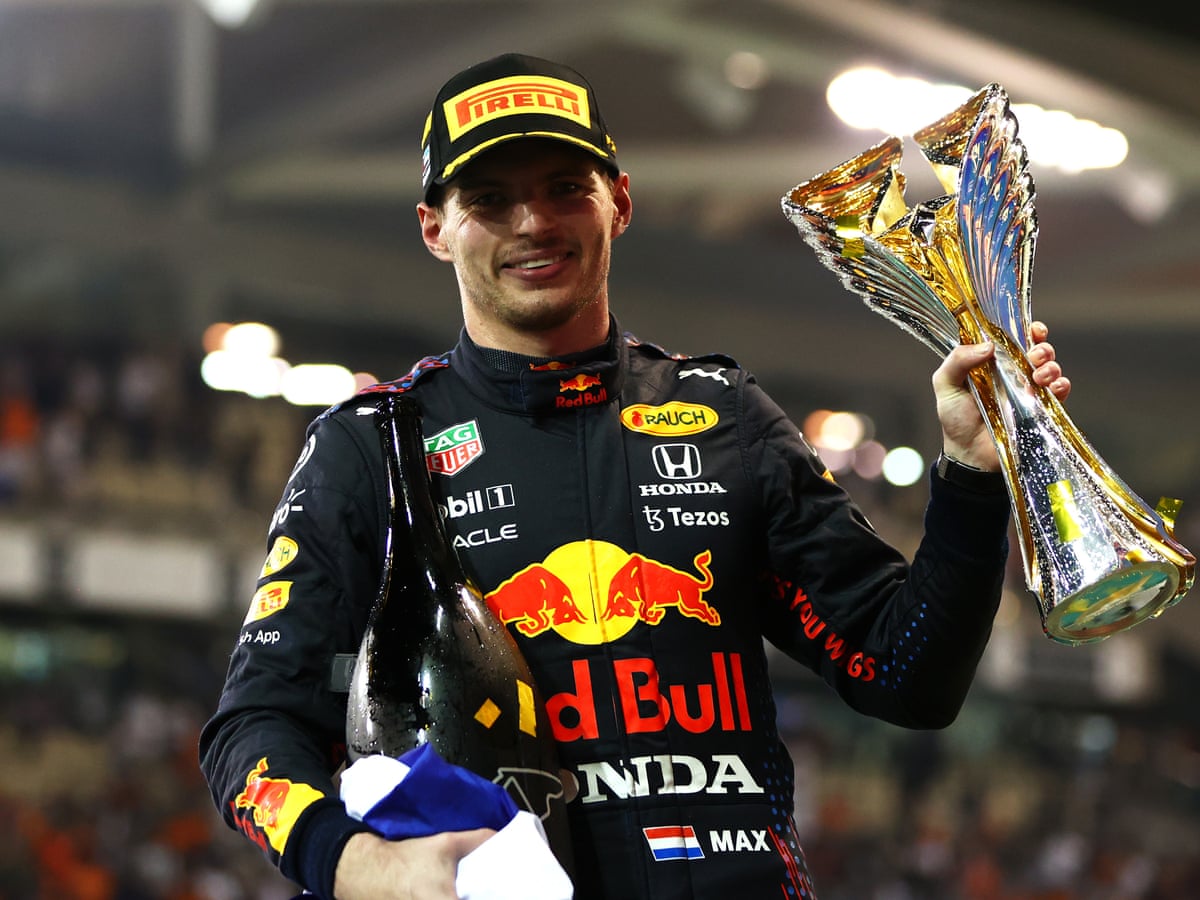
Max Verstappen’s meteoric rise in Formula 1 has been nothing short of extraordinary. Having now claimed four World Championships in a row with Red Bull Racing, the Dutch driver is now firmly etched in the sport’s history as one of the most dominant figures of his era. As Verstappen’s career continues to unfold, a natural question arises: where does he rank among the all-time greats of the sport, such as Ayrton Senna, Michael Schumacher, and Lewis Hamilton?
To answer this question, it’s essential to consider not only Verstappen’s on-track achievements but also the context in which he is competing, comparing his accomplishments against some of the sport’s legends. Let’s explore his legacy within the framework of F1’s greatest drivers.
The Greats: A Brief Overview
Before diving into Verstappen’s place in F1 history, it’s useful to establish the legacies of the three drivers often cited as the greatest of all time:
Senna’s combination of speed, technical brilliance, and sheer charisma made him one of F1’s most beloved figures. With three World Championships (1988, 1990, 1991) and 41 Grand Prix wins, Senna was known for his incredible qualifying performances, fearless driving, and his rivalry with Alain Prost. His tragic death at Imola in 1994, at the age of 34, left F1 fans wondering what further heights he could have reached.
Then there’s Michael Schumacher who literally redefined F1 dominance in the late 1990s and early 2000s. With seven World Championships (1994, 1995, 2000-2004) and 91 Grand Prix victories, the German driver was a master of consistency, strategy, and racecraft. His ability to push the limits of both himself and his car made him a formidable competitor for over a decade.
More recently, both Sebastian Vettel and Lewis Hamilton have rewritten many F1 records. Hamilton in particular holdsthe all-time pole positions and Grand Prix wins (a title he shares with Schumacher at 91 wins as of 2024). With seven World Championships (2008, 2014, 2015, 2017, 2018, 2019, 2020), Hamilton has established himself as one of the most complete drivers the sport has ever seen, combining raw talent with an unwavering drive for success, particularly during Mercedes’ dominant years.
Verstappen’s achievements are already impressive by any standard. As of 2024, he has secured multiple World Championships, with his dominance reaching a level rarely seen in F1. His 2022 and 2023 seasons were marked by unparalleled consistency, with an exceptional number of race wins in each year, often in commanding fashion.
What sets Verstappen apart is his ability to perform under pressure, his mastery of different race conditions, and his remarkable adaptability. Whether in wet conditions, in high-pressure championship battles, or during long seasons, Verstappen’s level of focus and competitiveness has been extraordinary. His driving style is aggressive yet precise, and his fearlessness on the track has led to some of the most thrilling races in recent F1 history.
In terms of raw talent, Verstappen’s natural ability to extract performance from a car is often compared to the very best. His overtakes, strategic mind, and consistency across various circuits have cemented him as one of the most complete drivers of his generation. But can he yet be compared to Senna, Schumacher, and Hamilton?
Verstappen’s driving ability is undeniable. His racecraft — including his ability to overtake, manage tire wear, and adapt to ever-changing conditions — has earned him admiration from fans and pundits alike. However, in terms of sheer raw talent, it’s hard to compare Verstappen to Senna, who was perhaps the most naturally gifted driver F1 has ever seen. Senna’s ability to extract every ounce of performance from the car in qualifying and during a race — particularly in high-pressure moments — remains legendary.
Schumacher, too, is often considered the benchmark for consistency, having built his success on incredible preparation, adaptability, and a relentless desire to improve. Verstappen, while incredibly skilled, hasn’t yet had the prolonged dominance that Schumacher enjoyed, where the German was the unequivocal number one driver for multiple seasons with Ferrari.
Hamilton, meanwhile, has been a master of the modern era’s highly competitive and technical F1 environment. His ability to manage complex race strategies, adapt to car development, and dominate over his peers for extended periods, particularly during Mercedes’ golden era, places him in the same conversation with Verstappen in terms of driving excellence.
At this stage, Verstappen’s career is still in its relative infancy compared to the likes of Schumacher and Hamilton. While Verstappen has already won four World Championships to his name, his career total remains behind Schumacher’s 7 titles and Hamilton’s 7 as well.
Senna’s three titles are far fewer, but his impact on the sport — in both his racing and his tragic end — has left a legacy that remains unchallenged in terms of influence and emotional connection with fans.
If Verstappen continues on his current trajectory, with Red Bull’s dominance and his ever-improving racecraft, there’s a real chance that his championship tally will continue to grow, potentially reaching the heights of Schumacher and Hamilton. However, his legacy will also depend on the longevity of his career and whether he can maintain his level of performance as the F1 landscape evolves.
One aspect where Verstappen still has a long way to go in comparison to Senna, Schumacher, and Hamilton is in terms of influence. While Verstappen’s fanbase is growing, particularly in his home country of the Netherlands, Senna’s cultural impact, Schumacher’s status as an icon of the sport, and Hamilton’s role as a global ambassador for diversity and social change have set them apart.
Verstappen’s legacy, at this point, is still largely tied to his on-track performances, whereas the other greats have expanded their legacies beyond F1 into global cultural icons.
It’s clear that Verstappen is one of the best drivers of his generation, and by the end of his career, he could well rank among the top five drivers in the history of Formula 1. His driving talent, his ability to dominate in a competitive environment, and his potential for continued success put him on the same pedestal as some of the sport’s greatest figures.
However, whether he can be definitively placed above or below Senna, Schumacher, and Hamilton will depend on several factors. If Verstappen continues his current run of success and eclipses the records of these icons, particularly in terms of championships and race wins, he could one day be seen as the best of all time. Until then, the likes of Senna, Schumacher, and Hamilton — with their multiple championships, undeniable influence, and monumental impact on the sport — still hold the edge.
For now, Verstappen is a champion of his era, and as he continues to race, he has the opportunity to define his legacy alongside the legends of F1. Time will tell where he ultimately ranks, but the signs are clear: Verstappen is already on the path to greatness.
 WHEEL2WHEEL REPORTS