By Joe Murphy
The enforcement of an Aerodynamic Oscillation Metric and a clampdown on flexi-floors, will take place from the Belgian Grand Prix next weekend! This has been met with a revolt by a number of teams.
Attention fans of Red Bull and Ferrari, we have some potentially catastrophic news for you. The FIA has now finalised the rule changes for the 2023 Formula 1 season, specifically designed to reduce porpoising in one scheduled plan.
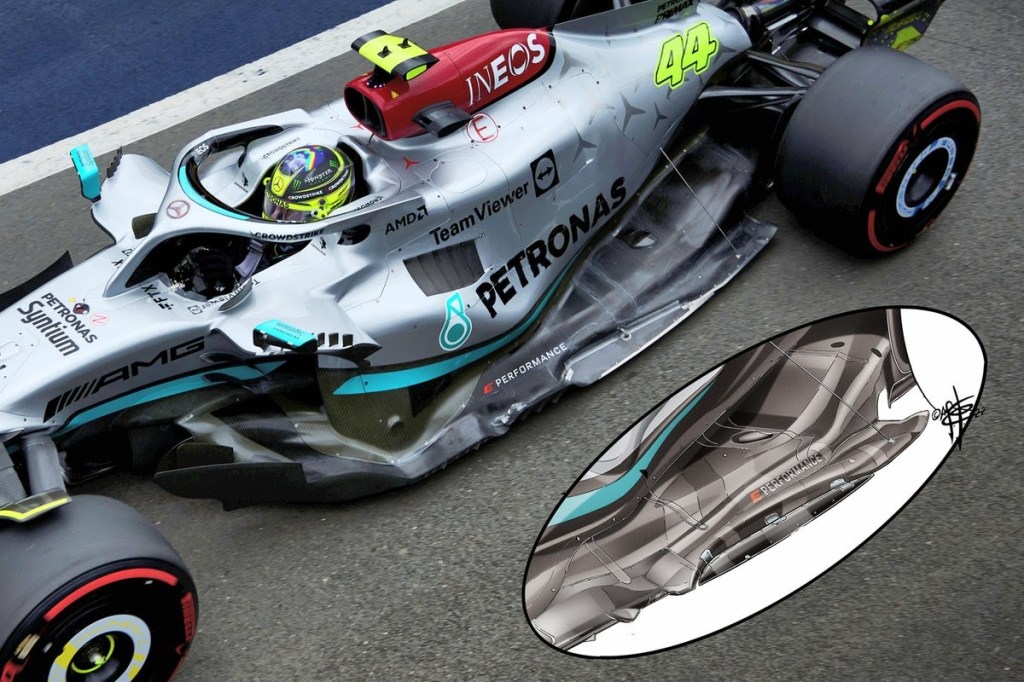
Concerns mounted in the early part of this year that the degree of vertical oscillation in the new-generation ground-effect cars, could cause long-term health problems for drivers. It was a common issue up and down the grid, although some teams were visibly affected more than others. Mercedes, for example, suffered greatly in comparison to their two main rivals.
Initial measures are being introduced at the Belgian Grand Prix next week, when the levels of movement of each car will be monitored and must fall within a certain limit. Looking at the longer term solution however, the FIA has proposed a more detailed plan for 2023 to eradicate the problem. However, this has caused intense controversy in the paddock, with both Ferrari and Red Bull disagreeing with the planned changes. In fact, it is now understood that six of the ten teams were not in favour of the proposed changes.
The problem for these six teams, including the top two in the current standings, is that these are changes in the name of safety. Therefore, they do not require a vote. In fact, the plans were given the green light by the World Motor Sport Council, earlier this week. It’s clear in the current technical regulations as Article 1.2.2 states: “Any changes made by the FIA for safety reasons may come into effect without notice or delay.” In summary, those against the changes can’t do anything about it.
The FIA suggested four specific changes. Of these, three are confirmed. Firstly, the raising of the underfloor diffuser throat. Also, applying more stringent lateral floor deflection tests as well as introducing a more accurate sensor to help quantify aerodynamic oscillations and police them more effectively.
The final change is yet to be approved, and may need alterations in order to be so. The floor edges would have had to rise by 25mm in the draft plan, although this has been reduced to a solitary 15mm. Despite what could be seen as backing down, the changes are still likely to make some of the teams unhappy. As highlighted repeatedly by certain Team Principals, many outfits are struggling to stay within the new budget cap. They are therefore unhappy at the inevitable cost implications of this regulation change, not to mention the late approval of all this.
Whether or not we see immediate changes to the race pace of top teams, remains to be seen. The process, although potentially drastic, could only lead to gradual changes only really seen to their fullest extent by the start of next season. It is something worth keeping an eye on, that’s for sure.
Make sure you check out Wheel2Wheel Podcasts! Available on Spotify and other platforms! https://wheel2wheelreports.com/2022/08/18/podcast-1-listen-here/
 WHEEL2WHEEL REPORTS