By Joe Man
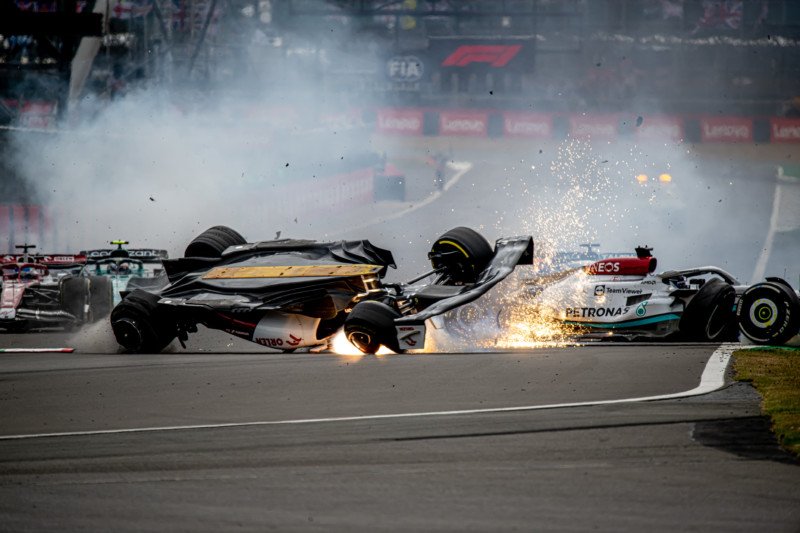
2022 has brought so much excitement and some amazing racing. It’s clear that the new regulations have been a huge success, and we are frequently seeing battles like we haven’t seen for years. The sight of five or six cars changing positions like it’s a karting race have brought smiles to all racing fans. The closer racing is bringing its fair share of incidents too, and there is a feeling that a high speed collision could happen at any time. Zhou Guanyu’s horrible crash was much more of a regular starting incident, but strange in its own way.
There are clearly some issues starting to develop which the FIA need to get on top of before it’s too late. The weight of these cars is so much heavier, which in itself can be seriously more dangerous. Zhou’s crash proved once again the importance of the halo and undoubtedly saved his life. It was peculiar to see that the car skidded so far on its roof before finally flipping. It could well be the weight factor, but needs to be understood. No doubt changes will now be made to avoid cars getting stuck between the fencing and the barriers as Zhou’s did. We are very lucky to have learned from this crash without serious injury. The crash the day before in F2 was even more frightening, with the Halo saving the life of Roy Nissany after Dennis Haugers car got launched off the sausage kerb before landing directly on the Halo instead of his head. It brought up the question once again about those kerbs and the danger they can cause.
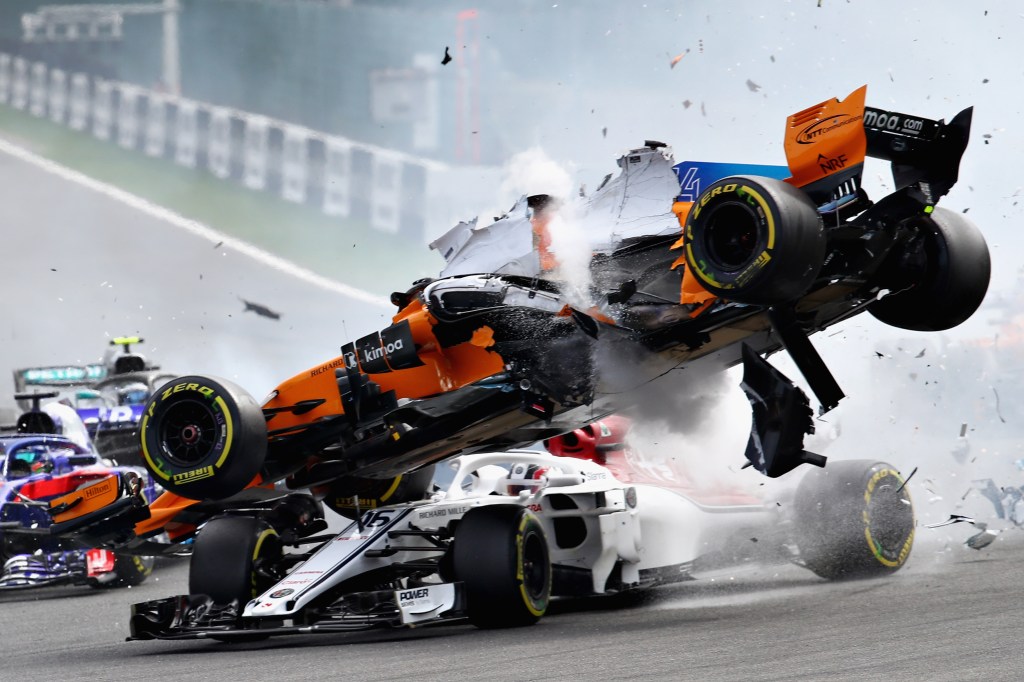
A few days later and it happened again at the world endurance championship with the Porsche of Henrique Chaves launched into a spectacular roll with the driver again luckily uninjured. Luck is going to run out soon, and it’s time to act before it does. F1’s tracks are becoming a problem this year. We have just witnessed the farce of track limits at the Austrian Grand Prix, and it has highlighted the need for change. The drivers clearly can’t see where the line is out of these new cars. The increased size of the tyres and the fairing ducts on the wheel have made it impossible for the drivers to see exactly where the front wheels are. It’s clear that this is also causing accidents in close combat. Nobody wants to see races decided on track limit penalties, and something needs to be done. George Russell is always good for an honest opinion, and he simply said let’s just bring back gravel traps and then the problem is gone. It’s a simple solution and one that seriously needs to be looked at.
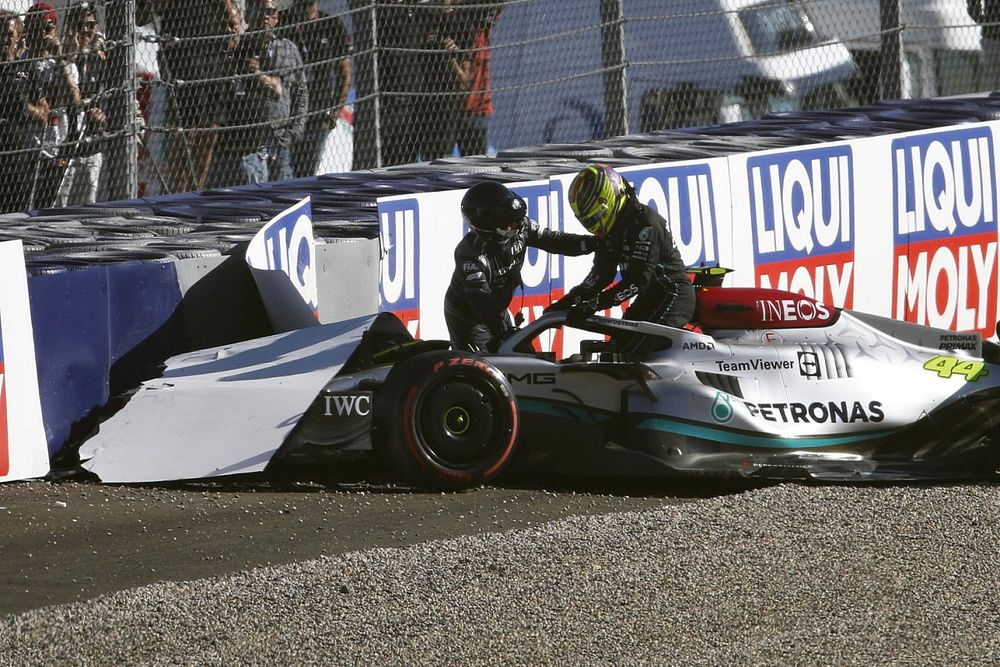
Sergio Perez was affected worse than anyone, with a penalty for track limits in Q2 handed out after Q3 was finished. Surely if an infringement has happened it must be dealt with straight away or let go. Perez used more tyres in Q3 that he wouldn’t have used if he was correctly penalised. Cameras then showed that others had done exactly the same without being penalised. It totally ruined what could have been a great weekend for the Mexican, who in his efforts to make up ground ended up in a collision with George Russell. Sergio was awarded an 8 place grid relegation, plus the fact he had used all the extra tyres used for no reason. Russell gets a 5-second penalty for causing the collision that wrecked Perez’s car, and then finishes fourth. Hardly seems fair. Some cars got penalties for multiple track limit warnings, and some got away with it. It’s hard for everyone to understand. Right now, what is paramount is the safety of the drivers and clear decision-making from the FIA.
As we head to Paul Ricard for the French Grand Prix, we can expect track limits to be in the headlines again as the track is full of tarmac run-offs. How this is policed will be fascinating to see. All the drivers want is consistency of rule enforcement. Running wide and then giving the place back is not working great, as drivers have become smart enough to realise they can position themselves to then strike straight back in DRS zones. The solution is complicated and is unlikely to be resolved this year. The return of gravel traps seems the obvious solution, but with that comes the risk of more cars rolling. Sausage kerbs need to be removed completely as they are simply a disaster waiting to happen. Street circuits are working much better as there are serious consequences for mistakes and all tracks need those. The new regulations have been a breath of fresh air.
Let’s hope that in the off season between 2022 and 2023 solutions can be found to once again keep improving the racing. With Masi gone, it is time to step up, FIA!
 WHEEL2WHEEL REPORTS