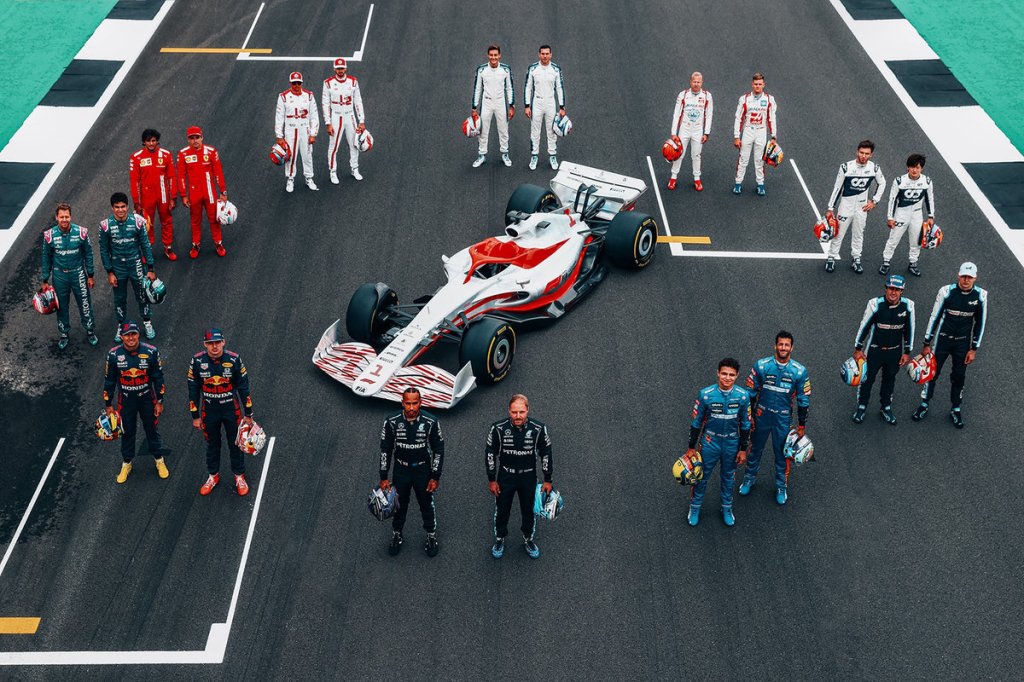
New design regulations made simple
In 2022, we will see the largest change in regulations in decades. Other than the power units, pretty much everything is about to change. And it’s all about better, and more even, racing!
For years, we have been frustrated watching a charging driver suddenly be able to do nothing when he gets within a second of the car in front. Similarly, a driver pushing his car to the limits will wreck his tyres. Every year, there are one or two races where we see teams in a holding pattern saving fuel and tyres. These races can be terrible spectacles for the sport. Ironically, it seemed in 2021 that finally things were getting closer but proper wheel to wheel (Wheel2Wheel) racing, still remained difficult.
There is of course no guarantee that these changes will work. All around the globe, the greatest engineers and their teams, will be finding every detail they can to create what they think will be the fastest design possible. We have seen in the past that with new regulations comes an opportunity for all teams to find that piece of magic that makes a race winning car.
The big changes:
Aerodynamics
So much about the new regulations revolve around the aero side of design. The new rear wing will play a huge part in that.
For a long time now a flat floor, crazy designed Barge boards and the rear wings have made cars cut through the air with the best aerodynamics we have seen.
The problem is that all that air then goes off the back of the car and disturbs the car behind. The following car is loosing a massive 35% of downforce when twenty metres behind.
For those new to the sport, downforce is air being made to flow over the car and push it down to the ground making the car stick to the road.
The new rear wing design is simply shaped to push the air higher and above the following cars. So far tests have shown the cars will now only lose 4% of downforce when twenty metres behind. It should be a game changer. Chasing cars will now be able to tuck in real close and get the full benefits of that slip stream!
Wheels will also now have covers on them, plus a clever little wake control device all designed to move the air to that magic rear wing.
All shassis will now have underfloor tunnels built into the floor, allowing for a huge increase in downforce, similar in some ways to the cars of the early eighties. In fact, many of 2022’s innovations are re-models of old ideas that worked and then where banned for various reasons.
Tyres
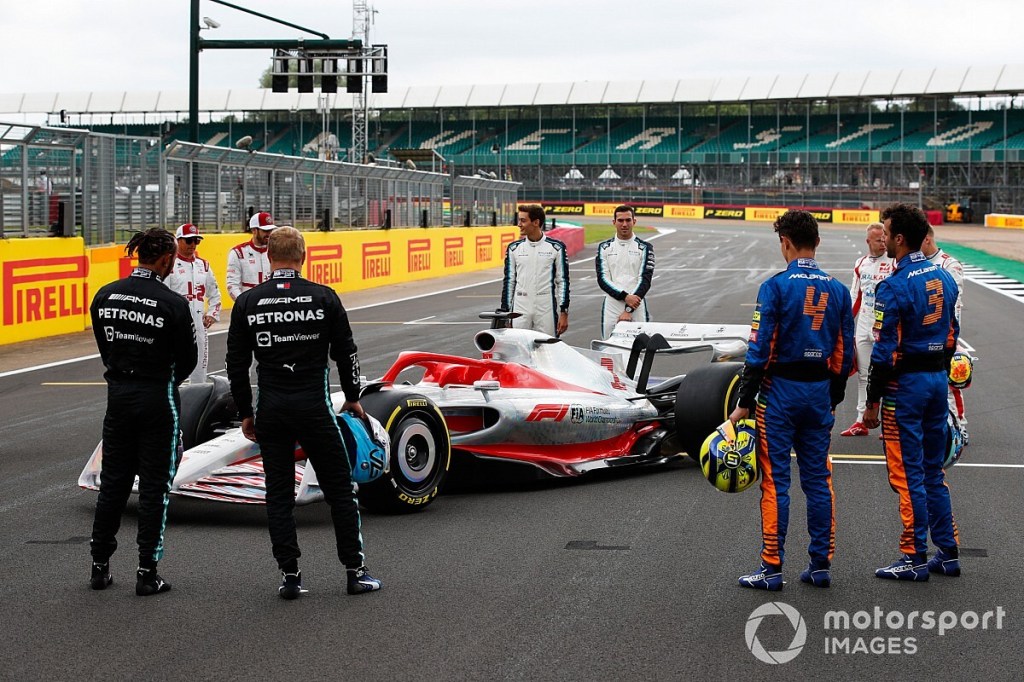
Wheels just got big!
2022 will see the introduction of 18 inch rims instead of the 13 inch we have seen for the last while. This will make for a much lower profile tyre. It is hoped that these tyres will be more durable and allow drivers to push them harder. It’s common knowledge that drivers have not been happy with the tyres for years now. They have been way to fragile and prone to over-heating. Tyres basically overheat and degrade due to the car sliding. It’s only when you see super slow motion footage that you realise just how much the drivers slide through corners. It shows an incredible level of skill to slide and drift the way these drivers do. The problem is that Pirelli’s tyres of the last few years start to melt and fall apart really quickly.
The 2022 tyres shouldn’t do so as easy which again will give the driver more ability to push the car to the limit for longer.
Fuel
There is also the arrival of a new fuel; E10. Once again the brightest minds have taken in concerns of the environmental footprint of F1 and come up with a sustainably made second generation bio fuel. What does that all mean?
Basically a “second-generation” biofuel is made from food waste rather than crops grown specifically for its production. This year it will make up 10% of the fuel’ up 5% from last year. The goal is to provide an alternative to fossil fuels by 2030.
Safety
Testing of cars is about to be taken up a notch. Formula one took Roman Grojean’s horrific crash seriously. It was an incident that frightened the whole paddock simply because on paper it shouldn’t have happened. Luckily we got to learn the lessons without loss of life.
In 2022 cars will undergo 15% more pressure from the front and rear in crash tests. The will also be squeezed harder than ever in massive machines to increase the safety in side impact. Engines have now been designed to split away from the fuel tank in a safe manner to reduce the risk of fire. All this has been required due to cars now being 5% heavier which obviously will cause a higher level of impact.
So will it all work? There have been over 7500 simulations done to date, and more data collected than you could possibly imagine. Racing though as we know, is not done on paper or simulations. Teams will have the ability to designs things slightly different as long as they stay within the brief. The car launches will be fascinating to see and to look at the variations in design.
The big one then will be pre-season testing when we finally see who has built a rocket and who has built a bucket!! I suspect there will be innovations that are on the edge of legal, protests on other designs and a lot of development over the season.
Its going to be a very exciting few months ahead!
 WHEEL2WHEEL REPORTS