By Joe Murphy

Kevin Nicholson, known adoringly by many fans up and down the country simply as Nicho, is a former professional footballer who has played at almost all levels across his career. He has since ventured into management and after spells at two clubs; he has become the head of coaching at Exeter City, where he is found today. Post2Post Reports’ Joe Murphy sat down with Nicho, to learn more about the sport from the man himself. We discussed the journey of his playing days, the transition to management and also considered future plans before concluding with some career highlight snap questions. This is what went down.
“No regrets”
We started off the discussion with a trip down memory lane. Nicho reveals how he broke into football after being scouted by Stoke City at twelve years of age, not far from his hometown of Derby. A couple of years later, he had played his way into a selective system by the name of Lilleshall School, which took the top sixteen players in the country, in any given year. The facility has seen the breakout of footballing stars such as Joe Cole, Scott Parker and Francis Jeffers, over the years. Kevin Nicholson was another name on this list. A pivotal career choice then followed. With offers from Arsenal and Manchester City, the defender instead opted for, the slightly closer to home, Sheffield Wednesday. When asked if he had any regrets about choosing Hillsborough over Highbury, he had this to say:
“When people asked if I have any regrets, I say no. As a result of my choices, I’ve met my wife and had my three children. If you’d of asked me when I was 20, from a professional standpoint, then maybe it would have been a different answer. I joined Wednesday at a time when the club soon after went into free-fall. We went through about five different managers over a couple of seasons.”
Following a lack of playing time, Nicho played out his trade at Forest Green, Northampton, Notts County and Scarborough, before making the move to the English Riviera to sign for Torquay United, in 2007.

Ups and Downs on the South Coast
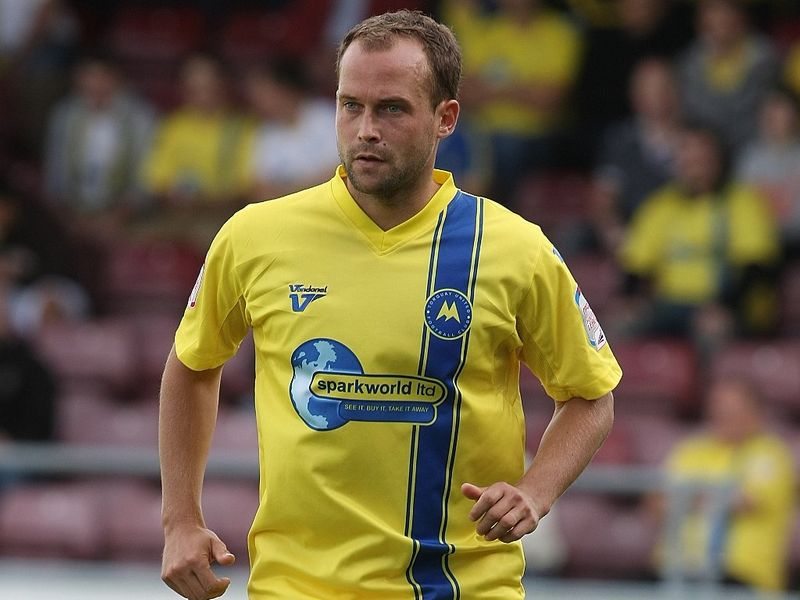
Nicho played at Torquay for seven years and even went onto manage the club for a couple of seasons in 2015. He suggested that there was a different culture at Torquay than at many other clubs, with players such as Kevin Hill, Steve Woods and Tony Bedeau having been at the club for many years. Despite having the opportunity to leave numerous times over his spell with the Gulls, himself and Lee Mansell were the next generation of stalwarts, mostly under the Paul Buckle era. He recounts how offers of maybe an extra hundred pounds here or there, wasn’t enough to encourage a move back up country. With some doubts over his form in the latter years of his stint, he managed to prove any doubters wrong and was in the League 2 Team of the Year, in 2012. After departing Torquay United, Nicho played out his concluding seasons at Kidderminster and Bath before becoming player/manager back at Plainmoor in 2015.
“The politics of football today are questionable… but I do miss it”.
When quizzed on the lifestyle of a professional footballer, Nicho claimed it depends very much on the individual. With technological advances in recent times, the game isn’t what it used to be and, as a result, neither are the players. Nicholson saw both era’s over his career. Moreover, gym training has gone a long way since the late 1990s, with a vague, blanket approach being replaced with more specific plans tailored for the individual.
Nicho then disclosed that a day in the life of a footballer would usually be a lot lighter than many reading this article, might expect. Starting the day with a light warm up from 10am, players only then train and do various drills for a couple of hours, before some gym work in the afternoon. He revealed that training concluded by the middle of the afternoon. Furthermore, he implied that the amount players put into training, depends on a range of factors, including age and playing level. He said that although he misses the days of his playing career, it wasn’t all sunshine and rainbows. He recounts:
“I had more bad experiences than good as a player. Getting abuse, losing games, it isn’t nice.”
After struggling in games against Bournemouth, Bradford and Barnet, and after having a rival manager ordering his players to target Nicho as the supposed weak link, the left back took these as signs to head into management. After all, as he argues, “it was the next logical step”.
The “Great Left Back” to the “Great Escape”.
To prepare for life as a manager, Nicho got himself fitter and did everything he could to research the best ways to maximise fitness and longevity, from trying chiropractic’s to having a go at acupuncture. In this transition, the differences between being a player and what it means to be a manager became evident. As a player, Nicho suggested that you have to be, to some extent, selfish. A player can play for the team but, ultimately, it is about your own performances and subsequent career. This is not the case when you’re a manager. Moreover, during the course of spells with different teams which naturally involved working under a variety of managers, it is reasonable to approve of certain managerial decisions and disagree with others.
Nicho told Post2Post Reports that he loves management, and does indeed wish to do it again sometime down the line, irrespective of relocating within England or abroad. His managerial highlight to this day was, without question, the daring great escape, where Torquay United used the addition of extra players in the January window as well as the right mentality, passion and style, to steer the Gulls out of trouble when relegation, at one point, seemed a certainty. The managerial feat was recognised to such an extent, that the nickname “Ranieri of the Riviera” was conceived.
Nicho revealed the key to his style of management is honesty. During his spell at Torquay, he both moved players on and brought players in, within an incredibly challenging financial situation. He noted that he often found it difficult to be truly open with fans and the media about events unfolding behind the scenes, particularly when involving economic decisions. This was even more prominent in his second season, where he couldn’t maintain the momentum or replicate the form of his team’s incredible survival from the previous campaign, and found himself in seventeenth for the second consecutive year. Nicho stressed to Post2Post that he truly believes that had he kept the same group of players, the he is confident they would have won the league or at least won promotion. He didn’t have a bad word to say about the owners during his time as Gull’s boss.
From his experiences so far, he says that he finds it very easy to be honest with players, even when it’s not necessarily nice. He also said that he is proud to have handed opportunities to players that have gone on to do brilliant things since, such as Wales International Kieffer Moore. He says one of the most important things is learning how to deal with the pressure:
“Pressure is relative. It’s not nice, but you’re not going to die because of it…”
Recounting those career highlights
Towards the end of our conversation, we flicked through some of Nicho’s favourite bits from his career. His favourite goal took little effort to reveal, with the last minute 25-yard strike against Barnet the easy choice. Regarding his favourite game, this was rather more difficult. He selected both the victorious Play-Off final between Torquay v Cambridge at Wembley and Notts County v Huddersfield where Nicho himself score the decisive goal to avoid relegation. His favourite player is Lee Mansell who he enjoyed many games with as Torquay’s backbone for multiple years in the late 2000s. Current Bournemouth manager; Scott Parker holds the mantle as the best player Nicho has played with, whereas Angus MacDonald, Kieffer Moore, Dan Butler and Nathan Blissett share the honour of being the best players he has had the privilege to manage. Nicho stressed it was important to note that he doesn’t take credit for the players’ success, he was just proud to have been a part of their respective journies. He emphasised in our discussion, that it is the players themselves who deserve all the credit for the career gains they have gone on to make.
Our closing remarks were on the favourite and least favourite parts of the beautiful game. He strongly suggested that the one thing he would change in current football is the changes themselves. In essence, leave football alone, using VAR as an example. On a more positive note, he highlights how the best thing about the sport is the fact it brings people together from all different teams, locations and walks of life. A standout example of this was at Wembley (Nicho’s favourite stadium to have played at), during that Play-off final where he heard 14000 fans shouting his name from the Torquay United supporter’s section.
The future
As the head of coaching at Exeter City, Nicho explained how he sees this part of his career being about considering how people learn and the psychology behind decision-making in football. He is also making sure he devotes time to his family, most recently making a trip to Old Trafford to see Ronaldo for his son’s birthday.
He admitted that he hoped to break back into management at some point in the future, once he fully satisfied his current role, which he sees as comparable to a football PhD.
In summary, Kevin Nicholson has had a life dedicated to football and family. Despite his playing days having come to a close, the managerial chapter is only just beginning.
 WHEEL2WHEEL REPORTS
One thought on “Post2Post Interviews – Murphy meets Nicho.”