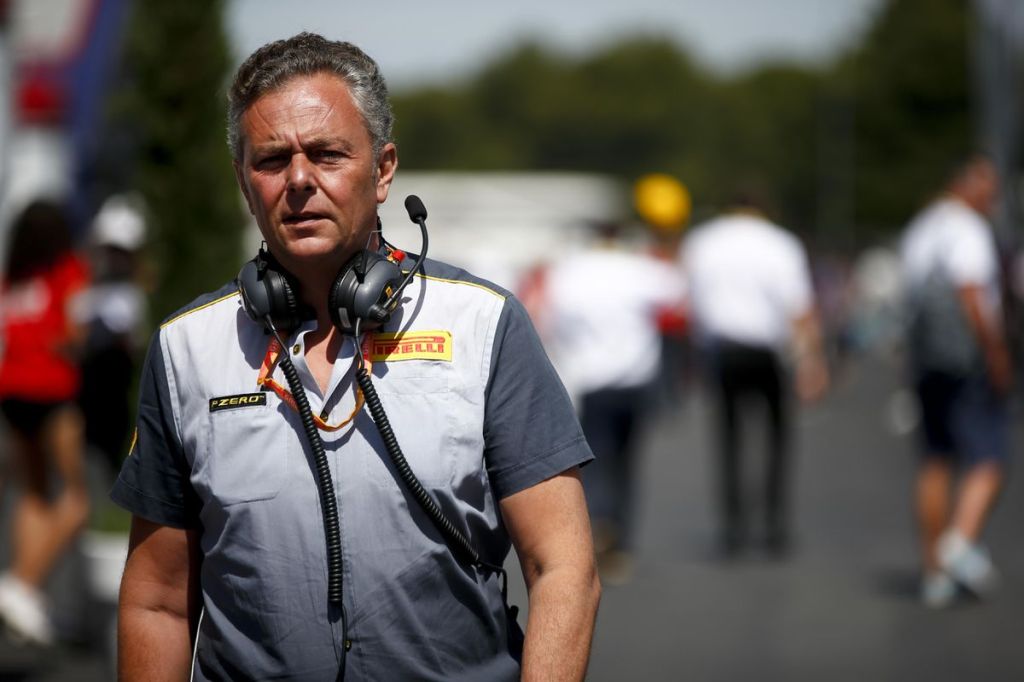
Wheel2Wheel Reports sat down with Head of F1 at Pirelli; Mario Isola, ahead of the 2021 Barcelona Grand Prix this past weekend. We discussed Pirelli’s tyre choices, the work that goes on during a race weekend and got some insight into changes for 2022.
Let’s start with Tyres…
We started by going back to basics. Pirelli make different compounds of tyres for Formula 1, such as the Soft, Medium and Hard Tyres, as well as the Full Wet and Intermediate tyres for racing in the rain. Mario revealed that Pirelli works closely with F1, the FIA, the teams and the drivers to make the best, most fair tyre selection. Different tyres are made from different materials and Pirelli has targets with each of them, that it needs to meet. This task is not easy, he reveals. With 23 different circuits on the race calendar this year, as well as 20 drivers and 10 teams to please, there needs to be a “compromise”, rather than developing a tyre that’s particularly suited to a certain team. This means for Barcelona, for example, Pirelli has a lot of work to do: “We consider the circuit layout, we use simulations from teams to judge the performance in qualifying… the tyre performance with DRS on and so on…” There is also, he confirms, a simulation of tyre race performance, including research into durability for longer stints.
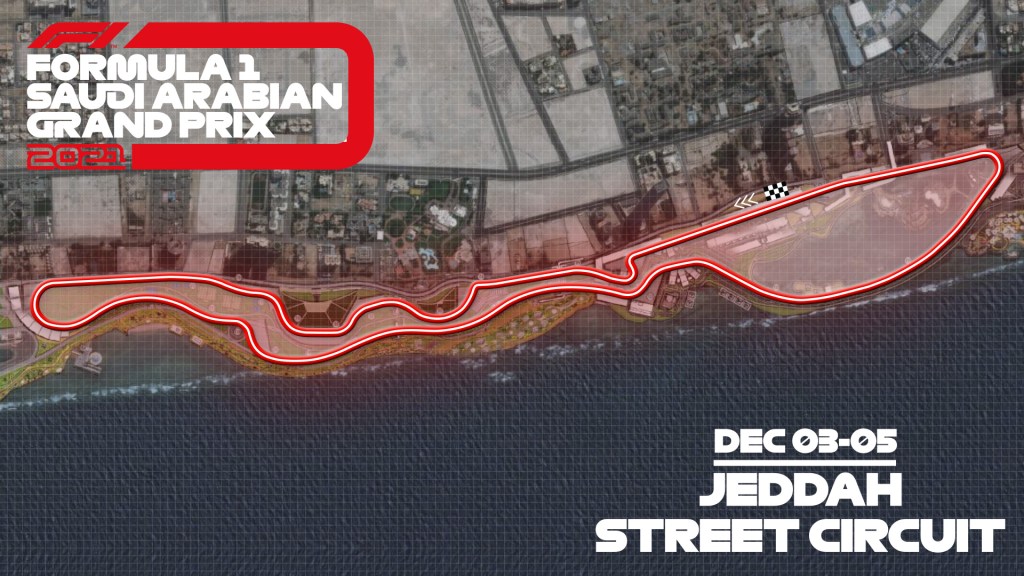
The simulation helps Pirelli understand the severity of the track layout, but there is also the impacts of weather conditions, to consider. Mario reveals that this is important for tyre performance, with Catalonia conditions being 10 degrees Celsius colder in May, than compared with testing in August. Previous events at this track meant the foundations for key research were already present. However, this cannot be said for all of this years races including new tracks in Saudi Arabia and the Netherlands, for example. Finally, Pirelli uses all this research and information to work with the FIA and then choose the tyre compounds for a race weekend, before disclosing this to the Constructors. An interesting insight then into the work Pirelli does.
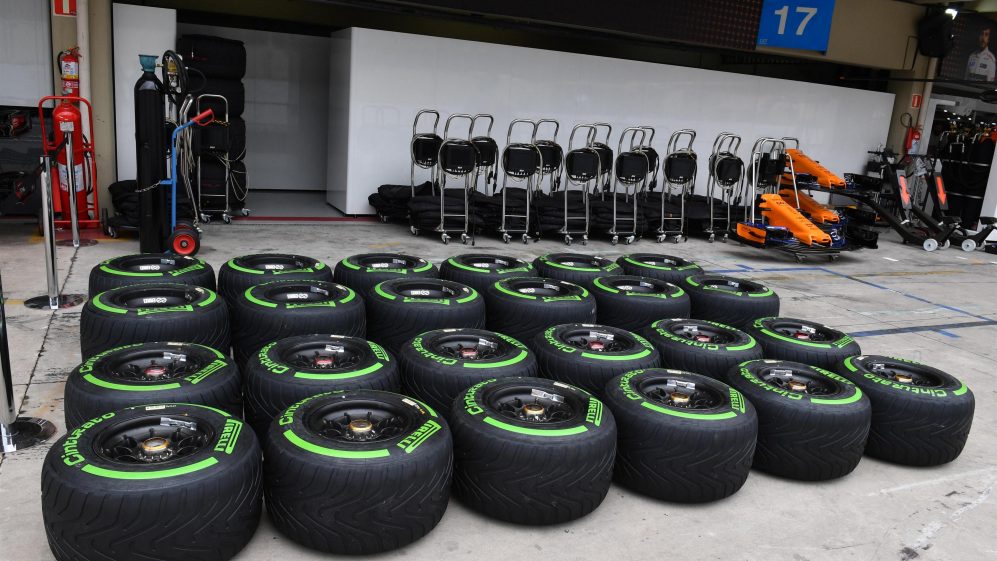
It is true that the company draw up a draft pre-season for all the tracks, regarding tyre choices. However, this is subject to change and a lot of decisions are made as a result of practice sessions and findings over the race weekend itself. Mario also revealed that what is most important is having both a Delta lap time for a lap on each of the compounds and an understanding of the behaviour of tyre degradation over different stints and race distances.
Therefore, there is a combination of planning well in advance and learning over the race weekend itself. This has to be the case, especially because of the pandemic. The “freedom” teams had has been restricted, primarily because of logistical changes and the need for Pirelli to be flexible with changes to the race calendar (Canada swapping to Turkey this year, for example).
“There is a lot to do over the weekend…”
The conversation then turned to what Mr Isola does over the race weekend itself. With a lot to do, he suggested that he starts the weekend by going onto the track with his team of between 50-60 people. Despite many normal pre-pandemic activities currently on hold, there is still much to do, such as engineering, technician work and media briefings. When asked what a standard race weekend lots like specifically, Mario revealed that he arrives at the track on the Wednesday before the race. Then, race tyre predictions and briefings are conducted on the Thursday. Meetings with teams, tyre checks and testing continues over Friday.
Most of this work and analysis takes place at the two on-site laboratories Pirelli has at each track. The data used is often collected during P1 and P2, with the teams feedback being used to check the stress on the tyres, compared with that of the simulation from three weeks prior, in order to check the accuracy of these predictions.
Next up is qualifying on the Saturday where there is more briefings and meeting related opportunities (Covid protocols have limited such events). Work continues until 10pm Saturday night; a long day, therefore, for the Head of F1 at Pirelli and his team. Much like other Formula 1 personnel, Mario then departs home on the Sunday night or Monday morning, location dependent. This doesn’t mean the work stops, however. When returning to his native Italy, specifically Milan, work and research continues on the 18-inch tyres for next year.
A “very big change” for next year…
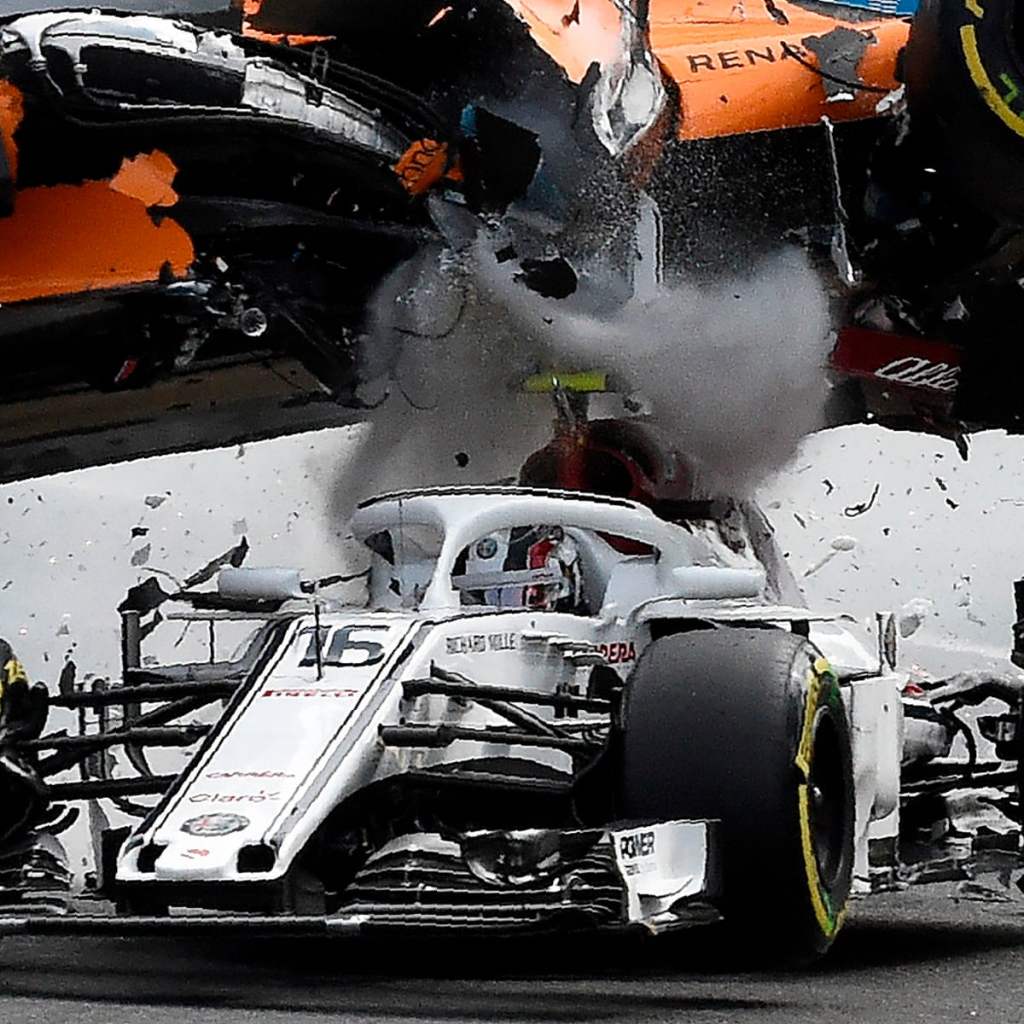
Not only the tyres, the whole car is set to change next year. Overall, Mario suggested that the changes to tyres and subsequent alterations on aerodynamics may make the cars slightly slower, mainly because when following a car, the changes mean the downforce will be noticeably more. As of this moment, cars lose 50% of the downforce when in the direct trail of another car. The reason for the change then, seems to be one of safety.
It appears that more downforce will mean less sliding and a more controlled drive. Plus, drivers have much more grip so there should be less of cars flying off the track. These new characteristics would have had a detrimental knock on effect on the previous 13-inch tyres, so the 5-inch circumference increase is necessary to maintain performance whilst also making overtaking achievable. Mario says the change is a big one but is ultimately “good” for the sport. He illustrated the progress on tyre safety for road cars, Pirelli has conducted in recent times, as evidence.
Mario made it clear than he believes that technological transfer of information from Pirelli’s work on road tyres, to F1, is key. Working on tyres for F1 cars is putting the compounds under the most stressful conditions. New materials, new indoor testing alongside tyres for production purposes means the current Formula 1 tyres are a very important research tool. He went as far as to say Pirelli considers F1 an “open laboratory” in regards to research and development. Next year, the size is the most relevant change, so the data gained from such trials can transfer to the companies work on tyres for road cars. That’s why, as Mario implied, Pirelli were more than happy to follow the FIA’s 18-inch tyre plan for 2022.
“F1 is not only a sport, not only competition with technology…it is a show. It has to be safe. We saw last year with Romain’s accident the level of safety of current Formula 1 cars… And in Imola, the Bottas-Russell crash… it means that safety is important, competition is important, the show is important, sustainability is important, with F1 very committed to sustainability… there are many areas in which we need to work an sometimes, these areas need to find, not a compromise… but ways to encourage real racing.”
Mario pointed to the criticism recent initiatives of F1 came under when first introduced, such as DRS and the Halo. Both of which, particularly the Halo, illustrate the progress being made in safety in motorsport.
So, what’s next?
The conversation then cast an eye to the future and what changes Pirelli may introduce next. Mario suggested that the current situation is a good compromise. Any more pit stops, he argues, would confuse spectators and complicate matters. On the other hand, without any pit stops at all, there is a risk of “procession” racing. That is why two stops is the best system. Also, there has been changes to tyre strategy and availability. He reveals that the old system of ‘Prime’ and ‘Option’ tyres was altered after discussions with teams, who favoured a soft/medium/hard compound approach. The reason why the change was received so positively was because of the increased importance of team strategy.

Mario: the ‘Motorsport Fan’ living the dream
Starting out as a test driver for Pirelli in Milan, the company then decided to hire him for work in the design department. Mario claimed that his “dream” was to work in motorsport and he was pushing for this move. As soon as an opportunity came, whether it be the FIA or Rally Sport Championship, he jumped into the role. In 2010, the true dream was fulfilled as the path to Formula 1 opened. When quizzed about his favourite track, Mario found it difficult to look beyond his “home” race, high speed track Monza, an event he used to go to when he was as young as 14 years old. In terms of layout, Mario is a huge fan of Imola and Mugello.
He also mentioned his affection for Silverstone which, in his words, is the hardest track on tyres because it is so fast and flowing, with Spa not being too far behind. Regarding cities, Montreal and Melbourne hold a special place in his heart and he is desperate for the sport to return to pre-pandemic norms, something he is all to familiar with, having volunteered for the frontline services during the pandemic in his free time. Having worked with the ambulance services since we was 18-years old, Mario revealed how all the protocols and PPE made things very strange and unprecedented. He volunteered despite now knowing to the full extent to the risk he was under by supporting his fellow Italians. Despite this, he was keen to “offer his availability” at the first opportunity on arrival back from Australia following the postponement of Race 1 of the 2020 season.
Mercedes are very strong…
Ending the conversation back on the topic of this Formula 1 season, Mario described Mercedes as “very strong”, especially seeing as regulation changes have yet to come into full affect. Red Bull are putting pressure on and are also strong, but it will be a huge effort to challenge the Silver arrows this year. Mario is also pleased that Ferrari are “back” and McLaren are also strong. Reinforcing this idea of Formula 1 as a “show”, he is pleased to see multiple teams challenging for race wins and not just one team dominating, as has been the case in prior seasons. He remembers the “fantastic” 2012 season where eight different drivers won a Grand Prix that year and he hopes something similar can be repeated in the sport, this year. The reason for this is mainly because a win with competition, Mario claims, is a different “flavour” of win. He went further, suggesting an earnt, competitive win will mean more compared to a win with ease and no competition at all. This is primarily because whoever takes the top step, will have fought for their victory.
Thank you for reading! Make sure you leave your email below to keep updated on new article releases.
Follow us on social media too…
Instagram – @w2wreports
Twitter – @Wheel2R
 WHEEL2WHEEL REPORTS
Good read Mr Murphy! Who’s in the pipeline to be interviewed next?
LikeLike
Lewis Hamilton next Wednesday, Mazepin on Thursday 🤞
LikeLike