Travel Writing Collection
Africa and Asia Uncovered – Entry #1 – The Tale of 2 Pointy Things (Egypt to Japan) – 24/10/2025

10 countries. 60 hotels. 15 flights. This was some trip. The purpose of this short piece is to give some insider perspectives that the likes of TikTok fail to convey. Whilst it’s undoubtedly true that social media had its uses whilst travelling Asia, there’s nothing like good old fashioned first hand experience. After all, that’s what travelling is about.
Egypt
The first call was flying with Easyjet from London Luton to Sphinx International Airport. It is true that this was the first I’d heard of there being a second airport near Egypt’s capital city. Our hotel was approximately a 45 minute walk to the Pyramids of Giza as we actually stayed in the area of Giza, West of Cairo. My first top tip, however, would be to get Uber. When compared to European prices, this cost was far less and saved walking around roads in the dark. One of the biggest takeaways from our stay in Egypt was the choas of the roads. Lanes were painted, but rarely adhered to. In the fairness of balance, we didn’t see one crash in our nine days in Africa.
The Pyramids were well worth a visit. You do get haggled by locals to buy tat but ultimately, once you say no, they tend to leave you alone. Starting a conversation would be your mistake, but there was no real reason to ignore these people. I answered where I was from and when the conversation inevitably got on to buying a towel or riding a camel, you just say no thank you and keep walking. As annoying as pestering can be (we’ll get to Jordan), don’t forget these people are dependent on a tourism industry that hasn’t been the same since the 2019 pandemic.
The pyramids took about three hours to see, including the Sphinx a quarter of an hour walk away. You’ll have to see the Sphinx from around a guarded wall unless you pay the thousands of pounds it costs to get up close.
What is also well worth doing whilst visiting Cairo is the Nile Cruise. Four solid hours of food, drink and entertainment. With tickets costing twenty dollars plus additional alcoholic beverage purchases, the entire night set us back around double that each. But it was well worth it. The singing, dancing and general fun made this one of the highlights of the trip.
If visiting Egypt, however, I wouldn’t bother with the famous international Museum. Not only is it an inconvenience to get to, but aside from King Tuts gear and two mummified corpses, the rest is just old pots and you’d be better off going to the Grand Egyptian Museum (GEM). Besides, most of the best stuff was acquired by the new venue at the back end of 2024 anyway.
Another thing to avoid is the quad biking in the desert. As fun as it was and as great as it was to see the Pyramids from a different viewpoint, it was short lived and expensive for the amount of time you get. For every stunning sunset is a dead horse by the side of the road you go past. Moreover, be sure to get your own quad bike if you insist on doing this. Otherwise you could literally end up a passenger and that takes all the fun out of it.
Overall though, the people are friendly enough. Getting a tour guide is worth it for the Pyramids alone, but I wouldn’t get one for anything else. I wouldn’t go into the Pyramids, I don’t think it’s financially worth it, but I’d visit the Marriott Hotel next door. Even if just for a drink. They have a marvellous Indian restaurant and the views of the site are breathtaking.
Also, mosquito bites are a problem so fail to prepare for that at your peril.
Finally, if visiting Egypt, then know that US dollars are like a sister currency. Everywhere we went accepted them, more so than Visa. Whilst taking Egyptian Pounds certainly saw us well, having some USD on you is not going to be a bad thing and will certainly be more useful to you than your credit card.
Japan
A twelve hour flight to Tokyo with dry Egyptian Airlimes was next. Tackling Tokyo misconceptions would take all day, but there a few worth mentioning here.
Firstly, getting around isn’t like being on a different planet. The train system works well and machines are not only easy to locate, but also have English translations too. As long as you know where you are going, it’s not as difficult to navigate as people would lead you to believe.
That takes me on to my second tip, get a sim card. One of our biggest regrets was not getting one, whether it be an E-SIM or physical one. It’s possible to navigate without, just becomes that much harder when trying to find a Lawson’s mini-smart or Starbucks to acquire the WiFi.
Tokyo is great though. It’s a lot of walking though. We amassed over 30,000 steps each day we were in Japan’s capital city. The famous Capsule hotels were a great experience. Clean, warm and quiet, they are perfect for the solo traveller. If you’re a couple or family, getting a proper hotel room makes much more sense, but it was great to experience nevertheless.
The best thing to do in Tokyo is walk around an immerse yourself in the city sound and vision. Yokohama is nice but only worth going to if you have surplus time and are headed that way. Shinjuku and Shibuya are the main areas to head to. One of the best experiences was frequenting cocktail bars in the heart of Shibuya, having Japanese Whiskey or Plum Wine. In terms of arguably the most important misconception though is the price. Compared to other places in Asia it is of course expensive. But in my own experience, and going to Japan at a time where the Yen is weak against currencies like the USD, it wasn’t as bad as originally feared. Cities such as Amsterdam, New York and London are far more expensive.
Moving away from Tokyo, most people get the train. However, why spend hundreds of dollars on the Bulleet Train when a domestic flight to Hiroshima set us back less than $30 each, when booked in advance. The hour long ish flight took us to the airport a thirty minute bus away from the city itself. And it was one of the best places in Japan.
You need not spend more than a few days here, but the bomb site and museum lead to this being of the most harrowing experiences of the trip. Truly worth a visit and not without it’s quirky bars such as Bar Mac and abundance of food restaurants. As in Tokyo, 24/7 drink vending machines and 7 Eleven shops were fully stocked up with basic dinners and snacks. However being a vegetarian here, let alone a vegan, was very difficult. Meat comes in pretty much everything, including when it isn’t listed on ingredients. The gate is also worth a visit if you have the time. It doesn’t cost much to get to, nor does it take too long being less than an hour. You can even leave bags at Hiroshima train station if you wish.
To get to Kyoto, we toom the bullet train. Best and cheapest when booked in advance, we had to pay nearly $100 USD for the few hours we were on there. Yes it’s quick, comfortable and clean but this was more a case of experiencing it for the experience itself.
Kyoto was good, although I coined this the most Japanese place in Japan. There are restaurants but don’t go out too late or else risk ending up with nowhere to go. European culture of eating beyond 9pm is non existent here. There are cool things to do where though. Seeing monkeys on top of the hill was an experience to never forget, although the hill was a bit of a trek getting up there, it was unquestionably worth it. The orange gates were cool too, even if engulfed by westerners.
Like with all of Japan, but here especially, we found the architecture stunning. The streets were quiet and clean, although cities got lively at night. However, if I was pressured to give one piece of key advice, it would be to have cash. Buses don’t take card and also require you to have coins to lay when you exit the vehicle. Yes, there is a change machine, but don’t leave yourself short and risk holding up the bus.
You’re arguably better off spending more time in neighbouring Osaka, where a local train is optimal, with there being no need at all to spend extra on the aforementioned Bullet Train. Osaka had much more of a city feel to it than Kyoto. Getting around on the train was easy, Osaka Castle was well worth a visit and the nightlife was brilliant. As in Hiroshima, we found a bar and just listening to music whilst drinking plum wine and Asahi. The best kind of venue for a cracking night.
Getting the train to Nara is also easy and quick, less then an hour in fact. The Deer are everywhere although not as polite as perhaps social media conveys so be wary of your belongings and food. Still, was a brilliant experience to have deer bowing to us whilst feeding. They do seem looked after to.
A overnight bus isn’t the most comfortable way to get to Mount Fuji, but it certainly made economic sense. Seeing the mountain in all it’s glory was amazing, and this was matched with the brilliant Fuji Q Highland theme park which is definitely worth a visit. The smaller museums a short walk away from the theme park were nice and worth a visit, but you only need a couple of nights in the area, unless you are planning to trek. There’s not as many restaurants and bars than on offer in the city. You could even do a day visit from Tokyo, with a two hour bus a viable option.
Getting to and from Narita Airport was easy enough, albeit not the cheapest airport to get to. Regardless, we had a plane to catch.
By Joe Murphy
Africa and Asia Uncovered – Entry #2 – A Comprehensive Tour of Vietnam
Hanoi Havoc (07/11/2024)

Hanoi was the first point of call after the catchy Vietjet Song was engrained into my head. The swirling winds instantly hit you, as does the sheer sound and buzz of the place. In truth, that sound and buzz never stops for the duration of your stay in Vietnam.
The streets of Hanoi are vibrant but you feel subtly melancholy, once aware of the history of this great country. The Starbucks by the centre almost smells of irony, if the scent of coconuts and massage oil wasn’t so strong.
What you notice, when you take a second to look around, is that everybody is doing something. There’s a purpose to every action. Public yoga classes happening in the Central Park, youngsters away from home and engaging in a unique cross between football and tennis, all whilst sellers dwindle down market streets hoping for a quick sale. Nowhere is this more obvious than at Train Street, with locals happy to help you find your way around with expecting a tip for their service.
You can’t help be attracted to this city, something about the Capital draws you in. It’s charming chaos, if ever an oxymoron described a place. The western TNC’s don’t clash with the tranquil vibe, instead they somehow, paradoxically, complement each other.
The motorbikes are chaos, but crossing a road is surprisingly easy. It certainly appears worse than it is. You simply walk and the bikes do the rest.
As a vegan, the food is slightly more limited but still plentiful. Nothing is too complex when using local businesses, it’s all easy and quick grub.
Before the bus across to Ha Long Bay, there’s just enough time for the famous Water Puppet Show near the centre lake. A cute show that illustrated the difficulty of being over 6ft tall in this sort of the world.
Just enough time to see Egg Coffees and red flags everywhere you look, on the way back to the hotel, naturally taking the route that includes beer street for the famous 50p beer selection. A solid 8.6/10 and a good first impression.
By Joe Murphy
Africa and Asia Uncovered – Entry #3 – Cambodia is a Beautiful Horror Story (01/01/2025)

It’s hard to put into words what I feel.
The Killing Fields don’t actually seem real.
The skulls and death, there’s quite a lot.
It’s clear the legacy remains of Pol Pot.
But Cambodia is so much more.
The culture, the food and the people at its core.
Seeing a place that is finding its feet.
With every local resident ready to greet.
Phnom Penh was first, the capital city.
The sports temples and back streets a mesh of peaceful and gritty.
Down towards Kampot, the scooters are back.
Everywhere is green, even the dirt track.
From the caves of here to the islands of Koh Rong.
The beaches so peaceful, you couldn’t be here too long.
Coconut, Sandy, Long the names of the sand.
Every night is capped by a local band.
Up to the final stop, a bus to Siem Reap.
With £25 Angkor Wat the final treat.
Make it there for sunrise, I know it is busy.
But it’s the 10 hours walking instead that makes you feel dizzy.
By Joe Murphy
5. STUMP2STUMP Ashes Preview – Who Makes the Cut for England as Root and Co look to Regain

By Bertie Youd
“The best English team since 2010…”
Never one to stay out of the spotlight, England cricket legend Stuart Broad is revelling in England’s prospects heading into this year’s highly anticipated Ashes series down under. With less than a month to go until the first ball is bowled at a sold-out Optus Stadium in Perth, it’s time to give my preferred England eleven to take to the field under the supervision and watchful eye of head coach – and Aussie favourite – Brendon McCullum.
Zak Crawley
The last two Ashes series have seen England open the batting with two distinctly opposing outcomes. The echoes of “Let’s get it on, Gilly!” to mark the start of the 2021 series still brings back haunting memories of Rory Burns being bowled first ball. Conversely, a sublime cover drive to mark the start of the 2023 series was delivered by none other than Zak Crawley himself. A promising score of 77 in Sydney last time out, followed by 189 at Old Trafford in the recent home series, certainly indicates his ability to take on the Australian pace attack. Area of concern? Shot selection. Crawley will need to find his feet early on the fast, bouncy wicket in Perth when facing the likes of Mitchell Starc and Scott Boland.
Ben Duckett
One of my guaranteed picks for England heading into this series is opening batter Ben Duckett. Arguably one of the best openers in world cricket this year, Duckett has to start for the Poms this winter. His aggressive, attacking approach to batting makes him a joy to watch and a nightmare for opposition bowlers. Whether it’s his infamous cut shots or his ability to time and clip the ball precisely off his pads into the leg side, Duckett is certainly a 360-degree player capable of transferring pressure back onto the bowlers. Area of concern? A tendency to be overly aggressive at times, and question marks remain over how he will fare playing some of his trademark shots on the notoriously bouncy Australian wickets.
Ollie Pope
Controversial? Perhaps. A frequent discussion heading into this year’s series is who will claim that number three spot: Ollie Pope or Jacob Bethell. I would expect – and prefer – Pope to take it. My reasoning is based less on Pope’s ability and more on Bethell’s lack of match fitness and Test-level experience. Bethell is widely regarded as the future of English cricket, but sending him in early – both in batting order and career timing – could prove costly to England’s chances of reclaiming the urn. Pope has faced criticism in his role as a Test batter, but if history tells us anything, he tends to score the bulk of his runs in the first Test of a series. Area of concern? His record against the Aussies – an average of just 15 runs.
Joe Root
Need I say more? The ICC’s number one Test batter in the world is a guaranteed name on England’s starting eleven come November 21. The likelihood of Root not being picked at number four is about as likely as the Australian fanbase welcoming Stuart Broad into their country with open arms during his stint as a commentator this series – it just won’t happen.
Root is a sublime cricketer at the peak of his powers and a record to chase down (most career runs currently held by Sachin Tendulkar). Can Root score his first Test hundred in Australia this year? I certainly think so. Area of concern? An attempted “Root ramp” first ball.
Harry Brook
Another shoo-in to the England starting eleven is ICC’s number two test batter in the world and recently appointed vice-captain, Harry Brook. Brook’s promotion to vice-captain emphasises his importance to the side, both through his batting ability and the leadership qualities he offers. Like many English batters now adopting the aggressive, attacking style of cricket promoted under Stokes and McCullum’s’ leadership (I refuse to use the “B” word), Brook can manipulate and pile early pressure on the bowling unit through his shot selection and fearless approach. Area of concern? Lack of Test-match experience down under. How will he fare?
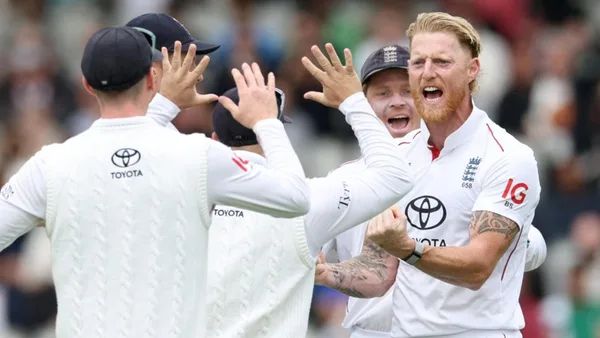
Ben Stokes
A pivotal series awaits Ben Stokes in defining his legacy as England captain – but how will he fare with bat and ball? I have Stokes batting at six, primarily for the fear factor he presents to the Aussies. His infamous knock at Headingly in the 2019 series still haunts Pat Cummins, Justin Langer, and perhaps even the away dressing room bin. Sure, his recent batting form hasn’t been the most convincing, but Stokes’s value lies in his ability to turn a game on its head. With the ball, he’ll no doubt have a spell or two and is more than capable of making crucial breakthroughs when they matter most. Area of concern? Stokes has only recently returned from a shoulder injury sustained in the final Test of the India series this summer. Match fitness and lingering injuries might affect his contributions.
Jamie Smith
I’ll be honest, as a Ben Foakes fan, I was initially pessimistic about Jamie Smith’s introduction to the Test scene in 2024. Nevertheless, Smith burst out of the traps, hitting notable scores of 184 against India and 111 against Sri Lanka – a clear sign of his ability to cause some serious damage down under. Batting at seven, Smith highlights the depth of England’s lineup for this upcoming Ashes series. Area of concern? Smith loves to attack the boundary ropes. With larger grounds in Australia, will he become susceptible to being caught deep?
Gus Atkinson
At number eight is seam bowler, Gus Atkinson. After a hamstring injury earlier this year against Zimbabwe, he returned to the Test fold in the final match of the India series. His figures of 5/33 in the first innings against a fierce India attack underline his importance to England’s bowling unit.
Atkinson has also shown he can hold his own with the bat, averaging in the low twenties with multiple fifties. Area of concern? Test-match fitness.
Brydon Carse
Brydon Carse has proven himself a capable Test bowler and deserves his place at number nine. He offers a combination of pace, bounce, and durability that suits the conditions in Perth better than fellow bowling options, Josh Tongue and Matthew Potts. Area of concern? While Carse hits the deck hard, he sometimes struggles with line and length. Poor control can gift easy scoring opportunities to experienced batsmen like Steve Smith and Usman Khawaja. However, able to bowl long spells, Carse’s inclusion will be key in supporting the workload of the bowlers at ten and eleven.
Jofra Archer
Cast your mind back six years – a young and exciting Jofra Archer strolling to the crease, firing down 150+ km/h rockets. Steve Smith knows this all too well! A fit and firing Archer in Perth this November provides the fear factor England need with the ball in hand – and for that reason, Archer must start.
Mark Wood
I know what you’re thinking: no spinner? Wood and Archer in the same team? Australia legend Brad Haddin was recently quoted by Fox Cricket as saying, “If I’m England and I’ve got those two [Archer and Wood] in the shed, I’m not holding them back.” I’ve opted for Wood and Archer for the first Test for two simple reasons: the Optus Stadium significantly favours pace and bounce, and England must win the opener. If England are to regain the Ashes this year, it’s imperative that McCullum and Stokes play their strongest, most aggressive attack. I fear the likes of Steve Smith and Travis Head would be licking their lips at the sight of an inexperienced spinner at the other end. Mark Wood, on the other hand? I think not. Area of concern? Workload. Playing two out-and-out pace bowlers will inevitably increase the risk of injury.
The best English team since 2010? I think Stuart Broad might just be onto something.
4. Why is Padel The UK’s Newest Hot Sport – By Joe Murphy
The growth of padel is part of a broader trend in the popularity of racquet sports. In recent years, there has been a notable increase in participation in various racquet sports, driven by a renewed interest in active lifestyles and social sports. According to a survey by Sport England, 34% of adults in England reported an increase in sports participation over the past year, with racquet sports being a significant contributor to this growth.
Tennis, squash, and badminton have long been popular racquet sports in the UK, with a strong following and well-established clubs and leagues. The Lawn Tennis Association (LTA) reported a 25% increase in tennis participation among 18-34-year-olds between 2020 and 2022. Similarly, squash has seen a resurgence, with the England Squash membership growing by 15% in the past two years.
The emergence of padel has brought a fresh dynamic to the racquet sports scene, attracting new players and enthusiasts. With over 760 courts in the UK and a growing number of players, padel is becoming an increasingly popular choice for those looking for a new sport to try. The accessibility and social nature of racquet sports have contributed to their growing popularity. Many people are drawn to the camaraderie and competition that these sports offer, as well as the physical and mental health benefits that come with regular exercise.
The rise of padel and other racquet sports has also been supported by investments in facilities and infrastructure. According to a report by the Sports & Fitness Industry Association (SFIA), there has been a 12% increase in the number of racquet sports facilities in the UK over the past five years, making it easier for people to take up these sports. Overall, the growth of racquet sports, including padel, reflects a broader shift towards more active and social lifestyles. As people continue to seek out new and exciting ways to stay active, racquet sports are likely to remain a popular choice for many years to come.

3. England Squad for the 2026 World Cup
By Joe Murphy
With Thomas Tuchel at the helm, England will hope to put the curse finally to bed with a win in the States. With France having attacking talent for fun, the Spanish winning mentality firmly established and even the likes of Brazil and Germany due a good run, it won’t be easy. However, with the right squad, it’s certainly possible and England should be one of the favourites when we kick off the tournament in little over a year. So, with all thinga considered, this isn’t what we want to happen, it’s what we think will happen. Who will make the plane and who will be staying at home.
Goalkeepers – Jordan Pickford, Dean Henderson, Nick Pope
James Trafford is unlucky to miss out here, but injuries aside these three keepers should be going. Whilst the Burnley stopper is the future number 1, there’s no reason that Pickford doesn’t hold his place. Nick Pope is England’s best on the ball and Dean Henderson has found his mojo after a few years without it.
Left Backs – Lewis Hall, Myles Lewis Skelly
Both young and playing Champions League Football on the year ahead, this makes all the sense in the world. The pair of them have maturity beyond their years and offer something different.
Right Backs – Trent Alexander Arnold, Reece James
Injuries aside, there’s chance both of these players start England’s first game, with one possible holding a midfield role. Trent has never established his place internationally and Reece James has breadstick legs. However, with Walker and Trippier now seemingly out of the picture it’s their time to step up.
Centre Backs – Marc Guehi, John Stones, Jarrad Braithwaite and Lewis Colwill
One of Stones and Maguire get in on experience alone and whilst the latter has once again established his Manchester United place, a four defender system suits Stones more. Guehi should start again if he has a solid season with Palace again. With this now looking like England’s weakest position, Konsa, Tomori and Burn are unlucky to miss out. However, the other two on this list will be ever presents for their sides and offer good cover for the other two.
Central Midfield – Declan Rice, Morgan Rogers, Conor Gallagher, Jude Bellingham, Kobbie Mainoo
Morgan Gibbs-White would be in my personal selection. Jordan Henderson definitely wouldn’t although I do expect him to miss out also, albeit narrowly. The same can be said for Adam Wharton. However, with some of the attackers able to fill in midfield (spoilers), there should only be room for five. Rice and Bellingham start. Manager like Gallagher and Mainoo would benefit from playing on this system as it suits him. As for Rogers, another season like last and he practically picks himself.
Attackers – Harry Kane, Ollie Watkins, Cole Palmer, Ivan Toney Phil Foden, Bukayo Saka, Antony Gordon
Kane starts what is likely to be his final tournament, although Ollie Watkins could be close and could play a pivotal role. Toney, despite moving to Saudi Arabia does have that aura to have a game-changing moment. As previously stated, the likes of Palmer and Foden can drop back to midfield if needed. Saka, Gordon, as well as Palmer and Foden, practically pick themselves as players with huge upsides and growing experience. Rashford could find form, Bowen, Madueke and especially Eze are hugely unlucky. In fact I’d have Eze over Toney, but I do think three strikers will go. Moreover, we all know Tuchel likes Mount, but they can’t be justified to get in ahead of this electric front seven. The same, to an extent can be said of the likes of Grealish, Jones, Delap and Barnes.

2. The Future of Thought Leadership in the Business Sphere
There is so many new and innovative key terms in the professional sphere. Arguably one more intriguing than any other is ‘Thought Leadership’.
The idea has recently emerged as a pivotal concept in contemporary business and academic discourse, encapsulating the idea of individuals or organisations exerting influence through innovative ideas, expertise, and vision (Schein, 2010). This article aims to explore the concept of thought leadership, its significance, and its applications in various contexts.
Thought leadership is a multifaceted concept that encompasses various dimensions, including intellectual capital, innovation, and influence (Davenport & Prusak, 1998). According to Sviokla (2009), thought leaders are individuals who possess a unique perspective, expertise, and ability to articulate their ideas in a compelling manner. They challenge conventional wisdom, offer novel insights, and inspire others to adopt new perspectives.
Thought leadership is crucial in today’s fast-paced, knowledge-driven economy, where innovation and adaptability are essential for survival (Nonaka & Takeuchi, 1995). By embracing thought leadership, organisations can differentiate themselves, establish credibility, and build trust with their stakeholders (Kotler & Pfoertsch, 2006). Moreover, thought leaders can facilitate organisational learning, drive innovation, and foster a culture of creativity and experimentation (Senge, 1990).
Thought leadership has numerous applications across various industries and contexts. In the corporate world, thought leaders can drive business growth, shape industry trends, and inform strategic decision-making (Hamel & Prahalad, 1994). In academia, thought leaders can advance knowledge, challenge existing theories, and inspire new research directions (Kuhn, 1962). Furthermore, thought leaders can play a crucial role in addressing societal challenges, such as climate change, inequality, and social injustice (Sachs, 2015).
Despite its significance, thought leadership is not without its challenges and limitations. According to Burgelman and Grove (2007), thought leaders often face resistance from established interests, and their ideas may be met with scepticism or even hostility. Moreover, the proliferation of social media has created new challenges for thought leaders, who must navigate the complexities of online discourse and maintain their credibility in a crowded digital landscape (Kaplan & Haenlein, 2010).
One of the primary benefits of AI integration is the enhancement of analytical capabilities. AI-powered tools can process vast amounts of data, identifying patterns and trends that human thought leaders might overlook. This synergy can enable thought leaders to provide more nuanced and informed perspectives, thereby augmenting their credibility and influence.
However, the increasing reliance on AI also raises concerns about the role of human thought leaders. As AI-generated content becomes more prevalent, there is a risk that the unique value proposition of human thought leaders may be diminished. To mitigate this risk, thought leaders must focus on high-level creative thinking, strategic insight, and emotional intelligence – areas where humans currently excel.
Moreover, the concept of thought leadership itself is not without its problems. The term has become somewhat of a buzzword, with many individuals and organisations claiming to be thought leaders without truly contributing meaningful ideas or insights. This has led to a degree of scepticism about the value of thought leadership, with some viewing it as little more than a marketing gimmick. Furthermore, thought leadership can be problematic when it prioritises self-promotion over genuine intellectual curiosity. When thought leaders prioritise personal branding over substantive ideas, the credibility of the concept is undermined. To restore trust in thought leadership, it is essential to focus on generating high-quality, insightful content that adds value to industries and audiences.
The future of thought leadership will depend on striking a balance between harnessing the potential of AI and maintaining the unique strengths of human thought leaders. By leveraging AI-powered tools to enhance analytical capabilities and focusing on high-level creative thinking, thought leaders can provide more value to their audiences.
In summary, thought leadership is a vital concept that has far-reaching implications for individuals, organisations, and society. By embracing thought leadership, individuals and organisations can drive innovation, shape industry trends, and address complex challenges. However, thought leaders must also navigate the challenges and limitations associated with this concept, including resistance, scepticism, and the complexities of online discourse.
Bibliography
Burgelman, R. A., & Grove, A. S. (2007). Let chaos reign, then rein in chaos—repeatedly. Harvard Business Review, 85(10), 121-128.
Davenport, T. H., & Prusak, L. (1998). Working knowledge: How organizations manage what they know. Harvard Business School Press.
Hamel, G., & Prahalad, C. K. (1994). Competing for the future. Harvard Business Review, 72(4), 122-128.
Kaplan, A. M., & Haenlein, M. (2010). Users of the world, unite! The challenges and opportunities of social media. Business Horizons, 53(1), 59-68.
Kotler, P., & Pfoertsch, W. (2006). B2B brand management. Springer.
Kuhn, T. S. (1962). The structure of scientific revolutions. University of Chicago Press.
Nonaka, I., & Takeuchi, H. (1995). The knowledge-creating company: How Japanese companies create the dynamics of innovation. Oxford University Press.
Sachs, J. D. (2015). The age of sustainable development. Columbia University Press.
Schein, E. H. (2010). Organizational culture and leadership. Jossey-Bass.
Senge, P. M. (1990). The fifth discipline: The art & practice of the learning organization. Doubleday.
Sviokla, J. (2009). The new rules of management. Harvard Business Press.

1. Why E+R=O is the way forward in critical decision making.
The formula E + R = O, which stands for Event + Response = Outcome, is a simple yet profound concept that has far-reaching implications for personal and professional development. This concept, popularised by Jim Rohn and later by Jack Canfield, suggests that the outcome of any situation is directly determined by our response to the event that has occurred (Rohn, 2005; Canfield, 2005). In essence, while we may not have control over every event that happens to us, we do have control over how we respond to it, and it is this response that ultimately determines the outcome.
This approach to problem-solving and personal development is rooted in cognitive-behavioural therapy (CBT), which emphasises the role of cognitive processes in determining emotional and behavioural responses (Beck, 1977). By adopting the specific E + R = O mindset, individuals can develop greater self-awareness, improve their emotional regulation, and enhance their problem-solving skills.
One of the most significant benefits of the ERO approach is that it empowers individuals to take responsibility for their lives. By recognising that our responses determine our outcomes, we can shift from a victim mentality to a more proactive and empowered mindset (Seligman, 1990). This is particularly important in the face of adversity or unexpected events, where our initial response can often dictate the trajectory of the outcome.
For instance, consider a situation where an individual is facing a setback in their career. An event occurs, such as being passed over for a promotion. In this scenario, the event (E) is outside of the individual’s control. However, their response (R) to this event can vary greatly, from anger and resentment to reflection and planning. If the individual responds by reflecting on their skills and areas for improvement, and then creates a plan to address these areas, the outcome (O) is likely to be more positive than if they had responded with anger and blame.
The E + R = O approach also highlights the importance of mindfulness and self-awareness in problem-solving. By being more mindful of our thoughts, emotions, and behaviours, we can better understand our typical responses to different events and make more informed choices about how we want to respond (Kabat-Zinn, 2003). This increased self-awareness can also help us to identify patterns or habits that may be holding us back and make positive changes.
Furthermore, adopting the aforementioned way of thinking can lead to improved emotional regulation and resilience. When we understand that our responses determine our outcomes, we are more likely to take ownership of our emotions and behaviours, rather than blaming external circumstances (Gross & Thompson, 2007). This can help us to better manage stress and adversity, and to bounce back more quickly from setbacks.
In addition to these individual benefits, this approach can also have a positive impact on relationships and teamwork. By recognising that our responses determine our outcomes, we can become more empathetic and understanding towards others, and more effective in our communication and collaboration (Goleman, 1995). This can lead to stronger, more positive relationships and more effective teamwork.
Additionally, the idea can be applied in various contexts, including business, education, and personal development. In a business setting, for example, understanding the importance of response can help leaders and employees navigate challenges and setbacks more effectively, and create a more positive and productive work environment (Lencioni, 2002).
Moreover, the concept offers a powerful framework for problem-solving and personal development. By recognising the role of response in determining outcomes, individuals can develop greater self-awareness, improve their emotional regulation, and enhance their problem-solving skills. This approach can lead to improved relationships, increased resilience, and greater overall well-being.
In practical terms, adopting the E + R = O mindset involves developing a greater awareness of our thoughts, emotions, and behaviours, and making more informed choices about how we respond to different events. This can involve practices such as mindfulness, reflection, and self-inquiry, as well as seeking out new skills and knowledge to improve our responses.
Ultimately, the E + R = O concept reminds us that we have the power to shape our outcomes through our responses. By adopting this mindset, we can take greater control of our lives, achieve more positive outcomes, and live more fulfilling and purposeful lives.
Bibliography:
Beck, A. T. (1977). Cognitive therapy: A new approach to the treatment of depression. Philadelphia: University of Pennsylvania Press.
Canfield, J. (2005). The success principles: How to get from where you are to where you want to be. HarperCollins.
Goleman, D. (1995). Emotional intelligence: Why it can matter more than IQ. Bantam Books.
Gross, J. J., & Thompson, R. A. (2007). Emotion regulation: Conceptual foundations. In J. J. Gross (Ed.), Handbook of emotion regulation (pp. 3-24). Guilford Press.
Kabat-Zinn, J. (2003). Mindfulness-based interventions in context: Past, present, and future. Clinical Psychology: Science and Practice, 10(2), 144-156.
Lencioni, P. (2002). The five dysfunctions of a team: A leadership fable. Jossey-Bass.
Rohn, J. (2005). The day that turns your life around. Jim Rohn International.
Seligman, M. E. P. (1990). Learned optimism: How to change your mind and your life. Alfred A. Knopf.
 WHEEL2WHEEL REPORTS